
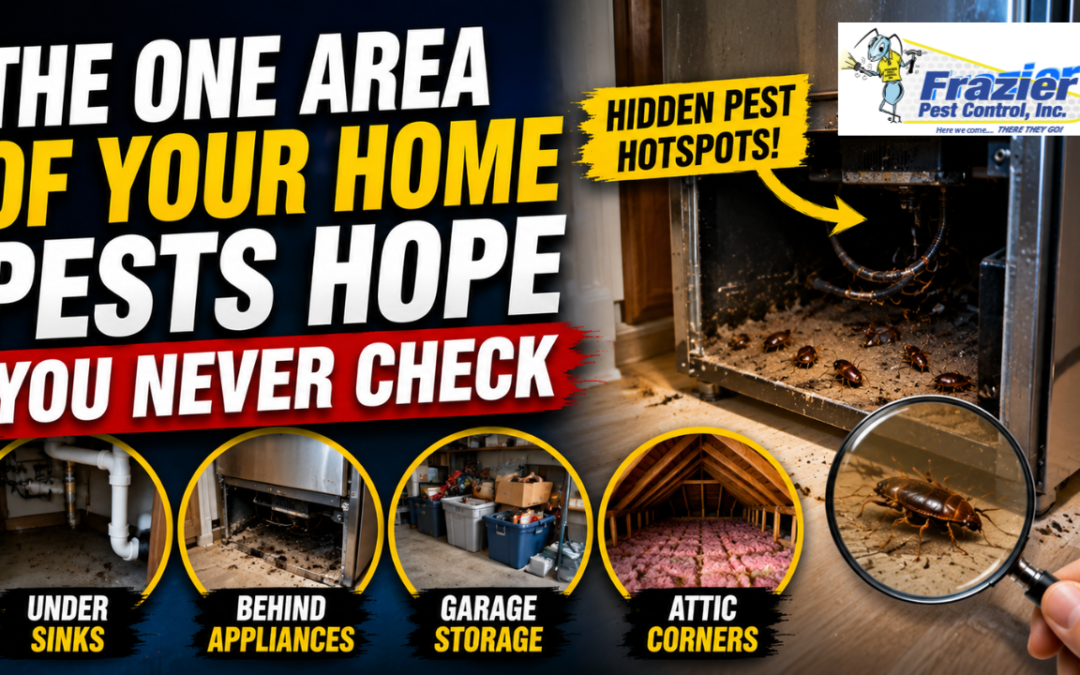
Most homeowners focus on obvious areas when looking for pests:
- kitchen counters
- floors
- windows
- bathrooms
But the areas pests rely on most are usually the places people rarely inspect.
Behind appliances.
Inside garage storage.
Under sinks.
Attic corners.
These hidden spaces provide exactly what pests want: darkness, warmth, protection, and easy access to food or moisture.
And by the time pests become visible in open areas, activity in these hidden zones may already be well established. “For a quick overview of the most common local invaders, see Insects in Palm Springs, CA: What You Need to Know.”
🧊 Behind Appliances Is a Major Pest Hotspot
One of the most overlooked pest areas in any home is behind large appliances like:
- refrigerators
- ovens
- washers and dryers
These spaces collect:
- crumbs
- grease
- moisture
- dust buildup
Because they’re warm and rarely disturbed, pests often use them as nesting and hiding areas.
Cockroaches especially thrive behind refrigerators due to warmth from the motor and nearby moisture sources. If you’ve noticed roaches at night, this guide explains the behavior and why daytime sightings matter: Why Cockroaches Come Out at Night (and What Daytime Means).
Cockroaches especially thrive behind refrigerators due to warmth from the motor and nearby moisture sources.
According to the Environmental Protection Agency, hidden cluttered areas and moisture sources are among the most common indoor pest harborage zones.
🚰 Under Sinks Creates Ideal Conditions
 Cabinets under sinks provide:
- darkness
- humidity
- plumbing access points
Even tiny leaks can attract pests quickly.
Common pests found under sinks include:
- cockroaches
- ants
- spiders
Gaps around pipes also act as direct entry points into the home. If you’re dealing with recurring trail ants around kitchens and bathrooms, start here: Argentine Ants in the Coachella Valley: The Unstoppable Invasion.
📦 Garage Storage Hides More Than Boxes
Garages are one of the biggest hidden pest zones in homes.
Stored items create:
- nesting protection
- dark undisturbed spaces
- hiding areas near walls and corners
Cardboard boxes are especially attractive because they:
- retain warmth
- absorb moisture
- provide shelter
Rodents and insects commonly nest behind long-term storage.
In desert homes, garages also become a common hiding zone for scorpions—see Scorpions in the Desert: Vigilant Strategies for Coachella Valley Homes.
🕸️ Attic Corners Often Go Unchecked for Years
 Attics provide pests with:
- warmth
- insulation
- quiet undisturbed areas
Many homeowners rarely inspect attic spaces closely, allowing activity to continue unnoticed.
Rodents may:
- build nests in insulation
- chew wiring
- travel through wall voids
The CDC notes that rodents inside structural spaces can contaminate insulation and indoor environments.
If you’ve heard scratching, found droppings, or noticed repeat activity, review Mice in Coachella Valley Homes: Signs, Risks, and Removal.
🚪 Hidden Areas Usually Connect to Entry Points
These overlooked spaces are often located near:
- plumbing openings
- utility lines
- wall gaps
- vents
- garage seals
Pests don’t just hide there — they use these areas to enter and move through the home.
The University of California Integrated Pest Management program explains that pests rely heavily on hidden structural voids and undisturbed environments.
⚠️ Why Hidden Pest Activity Becomes Serious
The biggest danger of hidden pest activity is time.
Because these areas are rarely checked:
- infestations grow unnoticed
- nests expand
- damage increases
- pests spread to other rooms
What starts behind an appliance can eventually spread throughout the home.
❓ FAQ Section
1. Where do pests usually hide inside homes?
Pests commonly hide behind appliances, under sinks, inside garages, attics, and wall voids.
2. Why do pests like hidden spaces?
These areas provide warmth, darkness, protection, moisture, and reduced human activity.
3. Why are garages attractive to pests?
Garages often contain clutter, cardboard boxes, and hidden corners that provide shelter and nesting areas.
4. Can pests hide behind refrigerators?
Yes. Refrigerators generate warmth and moisture, making them common pest hotspots.
5. Why should I inspect under sinks?
Leaks, humidity, and pipe openings make under-sink cabinets ideal for pest activity.
6. Do attic pests cause damage?
Yes. Rodents in attics can damage insulation, wiring, and structural materials.
7. When should I call pest control?
If you notice recurring pest activity or signs in hidden areas, it’s best to inspect early before infestations spread.
The areas you rarely inspect are often the exact places pests depend on most.
By the time you see pests in open spaces, hidden activity may already be growing behind walls, appliances, or storage areas.
Frazier Pest Control specializes in locating hidden infestations, identifying overlooked entry points, and eliminating pest activity before it spreads.
👉 Schedule your inspection today
https://frazierpestcontrol.com/
📞 Call (760) 328-6115
Don’t wait until hidden pest problems become visible infestations.
Recent Comments