
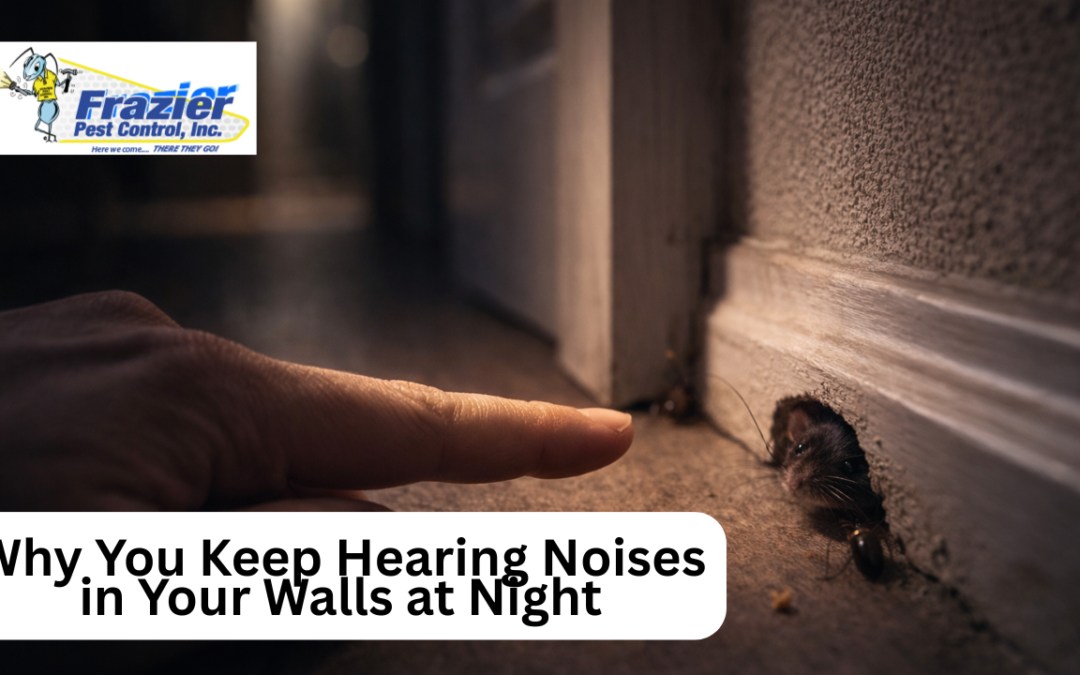
Hearing noises inside your walls at night can be unsettling. Scratching, tapping, or faint movement often happens when everything is quiet — making it more noticeable and harder to ignore.
Many homeowners assume it’s nothing serious. But in most cases, these sounds are not random. They usually indicate some form of hidden pest activity inside the structure of your home.
Understanding what’s causing these noises can help you identify problems early and prevent them from becoming more serious.
Read more: What Pests Are Really Doing Inside Your Walls (And Why It Matters)
🌙 Why the Noises Happen at Night
Most pests that live inside walls are nocturnal, meaning they are active at night and rest during the day.
This includes:
- Mice and rats
- Cockroaches
- Certain insects
- Some types of beetles
At night, homes are quieter and darker, which allows pests to move safely.
According to the Environmental Protection Agency, many pests avoid daytime activity and become active in low-light conditions to reduce risk.
Read more: Why Squishing Ants Can Make Your Infestation Worse
🐭 Rodents Are the Most Common Cause
 If you hear scratching or scurrying, rodents are often responsible.
Inside your walls, they may be:
- Building nests using insulation
- Chewing wood, drywall, or wiring
- Moving between rooms
- Searching for food
Rodents can squeeze through very small openings and quickly spread throughout a home.
The CDC notes that rodents can carry bacteria and contaminate indoor environments.
Read more: Why You’re Suddenly Seeing More Spiders Inside Your Coachella Valley Home
🪳 Insects Can Also Create Noise
While quieter than rodents, some insects can still be heard inside walls.
Cockroaches, for example:
- Move inside wall voids
- Travel through plumbing areas
- Become more active at night
In larger numbers, their movement can create faint rustling sounds.
Read more: Why Cockroaches Come Out at Night (and What Daytime Means)
🔊 What Different Sounds Can Mean
Different noises often point to different pests:
- Scratching / scurrying → rodents
- Light tapping / clicking → insects or wood activity
- Chewing sounds → rodents damaging materials
- Intermittent movement → nesting or travel
Recognizing patterns can help narrow down the cause.
Read more: Why You Keep Finding Bugs in the Same Spot Every Day
🏠 Why Pests Choose Your Walls
Wall voids provide:
- Protection from humans
- Stable temperatures
- Easy pathways throughout the home
- Close proximity to food and water
The University of California Integrated Pest Management program explains that pests often use hidden structural spaces to live and travel undetected.
Read more: What Pests Are Really Doing Inside Your Walls (And Why It Matters)
⚠️ Why You Shouldn’t Ignore It
 Noises in walls rarely resolve on their own.
Over time, pests can:
- Multiply
- Spread to other areas
- Damage insulation and wiring
- Contaminate surfaces
What starts as a small issue can become a much larger problem if ignored.
Read more: The Subtle Signs of a Cockroach Problem Most Coachella Valley Homeowners Overlook
❓ FAQ Section
1. Why do I hear scratching in my walls at night?
This is usually caused by rodents like mice or rats moving, nesting, or chewing.
2. Can insects make noise in walls?
Yes, especially in larger numbers. Cockroaches and some insects can create faint rustling or tapping sounds.
3. Why only at night?
Most pests are nocturnal and become active when the house is quiet and dark.
4. Is this a sign of an infestation?
It can be. Repeated noises usually indicate ongoing pest activity inside walls.
5. Can pests damage my home from inside walls?
Yes. Rodents can chew wiring and insulation, while some insects can damage structural materials.
6. Will the noises go away on their own?
Usually not. Most pests will stay and multiply if conditions are favorable.
7. When should I call pest control?
If you hear repeated noises or notice patterns, it’s best to inspect early before the problem spreads.
If you’re hearing noises in your walls at night, your home is giving you an early warning.
Pests don’t stay hidden forever — and the longer they remain inside your walls, the more damage they can cause.
Frazier Pest Control specializes in identifying hidden activity, locating entry points, and eliminating pests at the source.
👉 Schedule your inspection today
https://frazierpestcontrol.com/
📞 Call (760) 328-6115
Don’t wait for the noise to turn into a visible infestation.
Recent Comments