
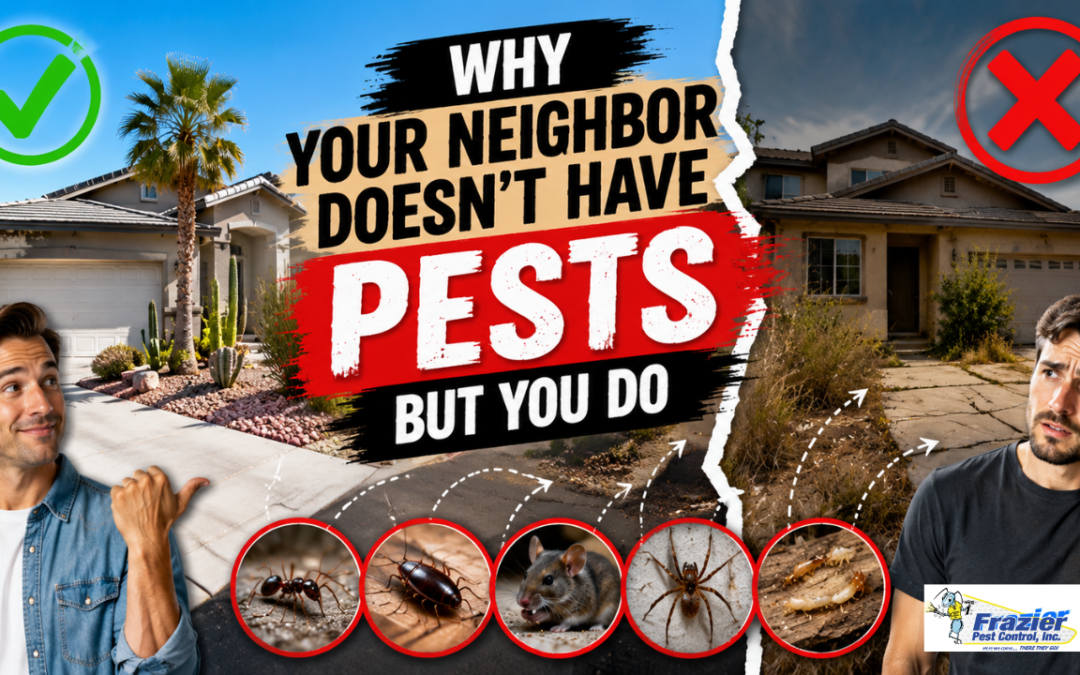
Are you asking yourself often why my house has pests but neighbors don’t?
It can be frustrating when your home seems to have constant pest problems, while your neighbor’s house looks completely pest-free.
Same street. Same weather. Same neighborhood.
So why does one home attract ants, cockroaches, rodents, or spiders while another seems untouched?
The truth is that pests don’t choose homes randomly. Small differences in moisture, landscaping, storage habits, food sources, and entry points can make one property far more attractive than the next. If pest activity keeps returning around your property, professional pest control can help identify the specific conditions attracting pests to your home.
Moisture May Be Drawing Pests to Your Home
Moisture is one of the biggest pest attractants, especially in hot desert areas like Coachella Valley.
Common moisture sources include:
- Overwatered landscaping
- Leaky irrigation lines
- AC condensation
- Dripping outdoor faucets
- Poor drainage near the foundation
Moisture around plumbing, garages, utility rooms, or water heater areas can also attract insects before homeowners notice a larger issue. Moisture can also support cockroach infestation solutions for Coachella Valley, especially near kitchens, bathrooms, garages, and hidden plumbing areas.
According to the Environmental Protection Agency, reducing moisture is one of the most important steps in preventing pest activity.
Your Landscaping Could Be Creating Shelter and that’s Why Your House Has Pests But Neighbors Don’t
 Dense shrubs, ground cover, mulch, and plants touching the house can create hiding places for pests.
Your neighbor may have trimmed landscaping, while your home may have vegetation that gives pests shelter and easy access to the structure.
The University of California Integrated Pest Management program recommends reducing pest shelter near buildings as part of long-term prevention.
Dense landscaping, irrigation, rocks, and exterior shelter can also create conditions where scorpions in the desert become more active around patios, garages, and foundations.
Small Entry Points Make a Big Difference
One home may have better-sealed doors, windows, vents, and garage openings. Another may have small gaps pests can easily use.
Common entry points include:
- Garage door gaps
- Cracks in stucco
- Utility line openings
- Gaps around plumbing
- Worn weatherstripping
Those same gaps can allow pests to move into wall spaces, garages, attics, and other hidden areas before the activity becomes visible. If you notice droppings, chewing, or scratching sounds near these entry points, rodent removal services may be needed.
Food Sources May Be Attracting Activity
Even clean homes can unintentionally provide pest food sources.
Common attractants include:
- Pet food bowls
- Trash cans
- Outdoor grills
- Fallen fruit
- Pantry crumbs
- Bird feeders
Ants and cockroaches need very little food to keep returning.
Even clean homes can attract roaches when crumbs, grease, pet food, trash residue, or hidden food sources remain.
If ants keep returning to the same food or moisture source, learn why squishing ants can make your infestation worse.
Storage and Clutter Can Create Nesting Areas
 Garages, sheds, and storage rooms can make a major difference.
Cardboard boxes, stacked bins, unused furniture, and stored seasonal items create dark, undisturbed spaces where pests can hide and nest. These low-traffic storage areas are often part of the one area of your home pests hope you never check because they provide darkness, shelter, and limited disturbance.
If cluttered garages or storage areas attract spiders, bug removal services can help inspect the larger pest issue instead of only removing visible webs.
Why Prevention Makes the Difference
Your neighbor may not be luckier. They may simply have fewer pest attractants.
Preventive pest control focuses on:
- Identifying entry points
- Reducing moisture
- Inspecting hidden areas
- Treating early activity
- Preventing infestations before they grow
Many pest problems are easier to address early, before pests become active at night, move into hidden areas, or begin spreading through the home.
The CDC notes that controlling pest access to food, water, and shelter is important for reducing pest-related health concerns.
If your neighbor doesn’t have pests but you do, there is a reason — and it can be found.
Frazier Pest Control specializes in identifying the exact conditions attracting pests to your home and stopping the problem at the source.
Don’t keep guessing why pests choose your house.
If your home keeps attracting pests while nearby homes do not, request pest control service online so Frazier Pest Control can inspect moisture sources, entry points, landscaping, food attractants, and hidden pest activity.
Call (760) 328-6115
FAQ Section
1. Why does my house have pests but my neighbor’s doesn’t?
Small differences in moisture, landscaping, entry points, food sources, and maintenance can make one home more attractive to pests.
2. Can landscaping attract pests?
Yes. Dense plants, mulch, and vegetation touching the house can provide shelter and pathways into the home.
3. Can clean homes still have pest problems?
Yes. Clean homes can still have moisture, cracks, plumbing gaps, or hidden nesting areas.
4. Do pests move from one house to another?
Yes. Pests can travel between nearby homes, especially in dense neighborhoods or shared landscaping areas.
5. Why do ants keep coming to my house?
Ants often follow moisture, food sources, irrigation, and entry points around kitchens, bathrooms, and foundations.
6. Can garage clutter attract pests?
Yes. Clutter gives rodents, cockroaches, spiders, and insects quiet places to hide and nest.
7. When should I call pest control?
If pest activity keeps returning or appears in the same areas, it’s best to schedule an inspection before the problem spreads.
Recent Comments