
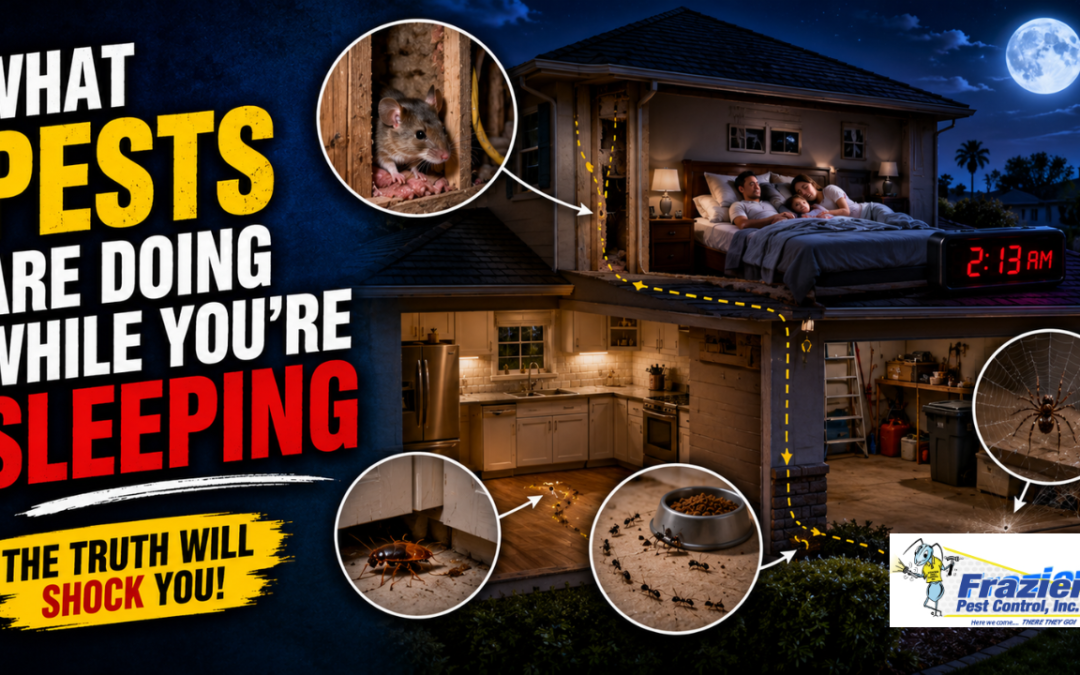
Most homeowners assume their homes are quiet and inactive during the night.
But while you’re asleep, many common household pests are at their busiest.
Cockroaches leave their hiding spots. Ants search for food. Rodents travel through walls and attics. Spiders move into hunting mode.
The truth is, nighttime is often when the most important pest activity happens.
Understanding what pests do while you’re sleeping can help homeowners recognize warning signs early and prevent larger infestations.
If nighttime pest activity keeps returning, professional pest control can help identify hidden activity, entry points, and attractants before the problem grows.
🌙 Why Most Pests Become Active at Night
Many household pests are nocturnal.
That means they naturally avoid daytime activity and become active after dark.
This behavior helps them:
- Avoid predators
- Reduce human interaction
- Move safely through open areas
- Search for food and water undisturbed
Cockroaches are one of the clearest signs of nighttime pest activity. Learn more about why cockroaches come out at night and what daytime sightings may mean.
According to the Environmental Protection Agency, many household pests prefer nighttime activity because it provides protection and better survival conditions.
🪳 Cockroaches Leave Their Hiding Places
During the day, cockroaches typically stay hidden:
- Behind appliances
- Inside wall voids
- Under cabinets
- Around plumbing
At night they emerge to search for:
- Food crumbs
- Water sources
- Grease residue
This is why homeowners often see roaches when they suddenly turn on a kitchen light late at night.
If you see one roach after dark, it may not be alone. Read why seeing one cockroach is almost never just one.
🐭 Rodents Begin Their Nightly Routes
 Mice and rats are most active after dark.
While you’re sleeping, they may be:
- Traveling through attics
- Moving inside walls
- Searching for food
- Collecting nesting materials
If scratching, chewing, or movement sounds continue at night, rodent removal services may be needed to inspect entry points and nesting areas.
The CDC notes that rodents often travel long distances inside structures during nighttime hours.
🐜 Ants Are Building Trails
Many ant species perform much of their foraging activity overnight.
During the night they:
- Search for food sources
- Establish new trails
- Expand colony territory
- Communicate resource locations
This is why ant activity often seems to “appear suddenly” the next morning.
If ants appear suddenly in the morning, avoid crushing them before understanding the trail. Learn why squishing ants can make your infestation worse.
🕷️ Spiders Are Hunting
Spiders become especially active after sunset.
At night they:
- Build webs
- Repair damaged webs
- Hunt insects
- Relocate to better hunting locations
Increased nighttime insect activity often leads to increased spider activity as well.
🚪 Pests Are Exploring Entry Points
 Many pests use nighttime hours to investigate structures.
They search for:
- Door gaps
- Window openings
- Garage seals
- Utility penetrations
Because temperatures are cooler and human activity is reduced, nighttime provides ideal conditions for exploration.
The University of California Integrated Pest Management program notes that many pests take advantage of low-disturbance periods to expand activity.
⚠️ Why This Matters
One of the biggest mistakes homeowners make is assuming that no visible pests means no pest activity.
In reality, much of the activity happens while the household is asleep.
By the time pests become visible during the day, colonies may already be:
- Established
- Reproducing
- Expanding
Understanding nighttime behavior helps explain why infestations can grow unnoticed.
Just because you don’t see pests during the day doesn’t mean they’re not there.
While your family sleeps, pests may be searching for food, expanding colonies, and exploring new areas of your home.
Frazier Pest Control specializes in identifying hidden pest activity before it turns into a major infestation.
👉 Schedule your inspection today
https://frazierpestcontrol.com/
📞 Call (760) 328-6115
Stop nighttime pest activity before it becomes a daytime problem.
❓ FAQ Section
1. Are most household pests nocturnal?
Yes. Many common pests including cockroaches, rodents, and some ants are most active at night.
2. Why do I only see cockroaches at night?
Cockroaches avoid light and typically emerge after dark to search for food and water.
3. What are rodents doing while I’m sleeping?
Rodents often travel through walls, attics, and garages searching for food and nesting materials.
4. Do ants work at night?
Yes. Many ant species perform a significant amount of foraging and trail-building overnight.
5. Why do spiders seem more active at night?
Spiders hunt insects that are also more active after sunset.
6. Can pests enter homes at night?
Absolutely. Many pests explore structures and search for entry points during nighttime hours.
7. Does seeing pests during the day indicate a bigger problem?
Often yes. Daytime sightings can sometimes indicate overcrowding or larger infestations.
Recent Comments