
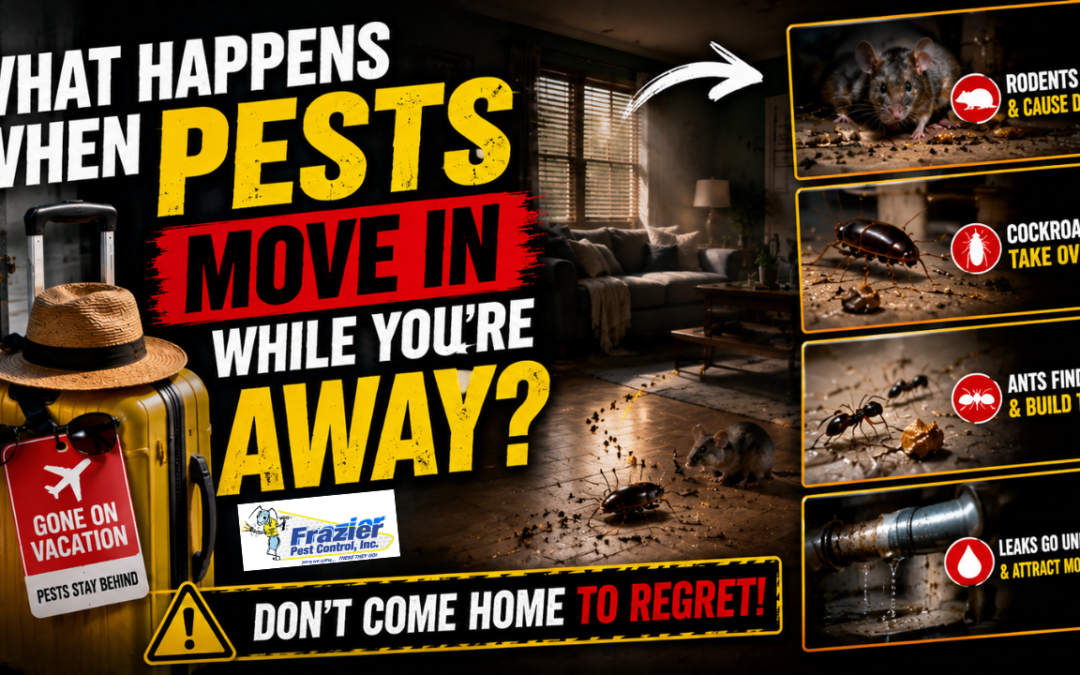
Leaving your home empty for a few days may seem harmless. But when no one is around, pests can take advantage of the quiet.
Rodents, cockroaches, ants, and spiders often become more active in undisturbed spaces. While you’re away, a small pest issue can turn into a larger problem without anyone noticing.
Here’s what can happen when pests move in while you’re gone — and how to prevent it.
Why Empty Homes Attract Pests
Pests look for three things: food, water, and shelter.
An empty home often provides all three with very little disturbance. No footsteps, no lights turning on, no doors opening, and no daily cleaning gives pests more freedom to explore.
According to the Environmental Protection Agency, reducing pest access to food, water, and shelter is a key part of effective pest prevention.
Rodents Can Nest Quickly
Rodents are cautious when people are home. But when a house is quiet, they may explore garages, attics, kitchens, and storage spaces more freely.
While you’re away, rodents may:
- Build nests in insulation or boxes
- Chew wiring or stored items
- Search for pantry food
- Leave droppings behind
Cockroaches Spread in Hidden Areas
Cockroaches thrive in dark, quiet environments. An empty home gives them time to move from hiding places into kitchens, bathrooms, garages, and cabinets.
They may gather near:
- Sinks
- Water heaters
- Dishwashers
- Pantry areas
- Trash cans
The University of California Integrated Pest Management program notes that cockroaches prefer warm, protected areas with food and moisture access.
Ant Trails Can Form Before You Return
Ants can locate food or water quickly. If a small spill, pet bowl, or crumb source is left behind, ants may establish trails while the home is empty.
By the time you return, what started as a few ants may look like a full invasion.
Moisture Problems Can Get Worse
 Small leaks are easy to miss before leaving home.
While you’re gone, moisture from plumbing, AC condensation, irrigation, or water heater areas can attract pests and support ongoing activity.
The CDC notes that pest activity is often connected to sanitation, moisture, and structural conditions inside homes.
Why Vacation Pest Problems Escalate
The biggest issue is not always that pests enter — it’s that no one notices.
A problem that might normally be caught in one day can continue for a week or longer. That gives pests time to nest, forage, reproduce, and spread.
How to Protect Your Home Before Leaving
Before leaving, homeowners should:
- Empty trash cans
- Store food in sealed containers
- Remove pet food and water bowls
- Check under sinks for leaks
- Seal visible gaps around doors and windows
- Reduce clutter in garages and storage rooms
- Schedule a preventive inspection if pest activity has been noticed recently
Strong CTA
If you’re leaving your home empty, don’t leave it vulnerable.
Pests can move quickly when no one is around — and the longer they go unnoticed, the harder they are to control.
Frazier Pest Control helps Coachella Valley homeowners identify hidden entry points, moisture problems, and pest risks before they turn into infestations.
Schedule your inspection today:
https://frazierpestcontrol.com/
Call (760) 328-6115
Protect your home before pests move in while you’re away.
FAQ Section
1. Can pests move in while I’m on vacation?
Yes. Empty homes are quiet and undisturbed, which can make pests more comfortable exploring and nesting.
2. What pests are most common in empty homes?
Rodents, cockroaches, ants, spiders, and silverfish are common in quiet or vacant homes.
3. How quickly can pests become a problem?
Some pest activity can increase within days, especially if food, water, or shelter is available.
4. Should I remove pet food before leaving?
Yes. Pet food and water bowls can attract ants, cockroaches, rodents, and other pests.
5. Can a small leak attract pests while I’m away?
Absolutely. Even minor moisture can attract insects, especially in hot desert climates.
6. Should I schedule pest control before vacation?
If you’ve noticed pest activity or are leaving for an extended period, a preventive inspection is a smart step.
7. What should I check when I return?
Look for droppings, ant trails, strange odors, gnaw marks, dead bugs, or activity near sinks, garages, and pantry areas.
Recent Comments