
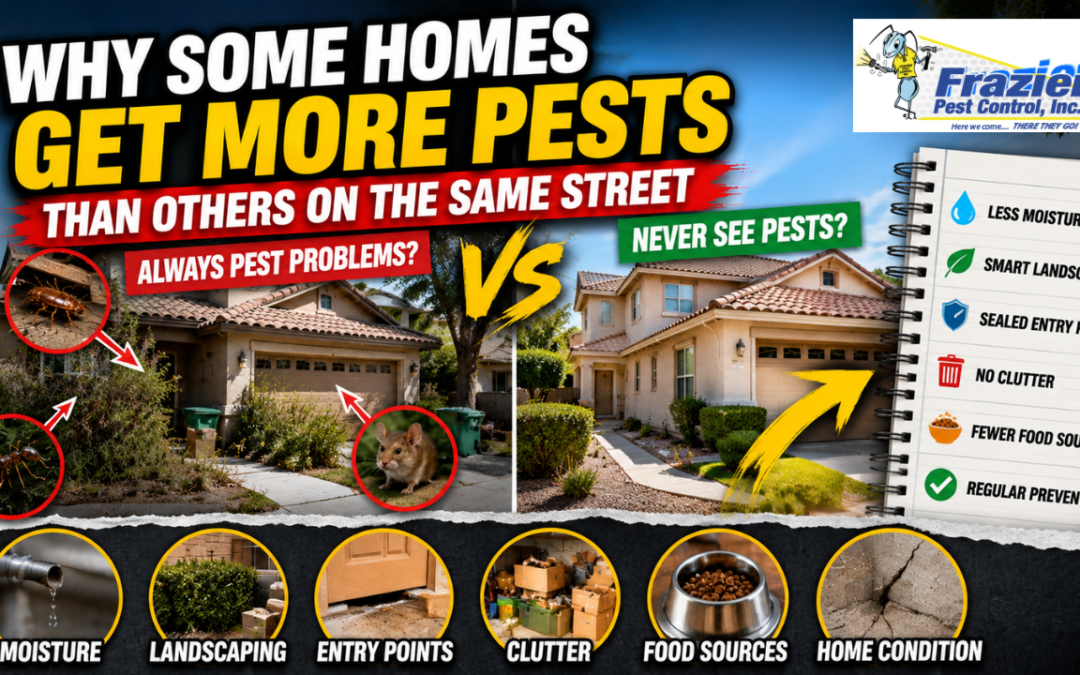
Have you ever wondered why your home seems to have constant pest problems while your neighbor across the street rarely sees a bug?
After all, you live in the same neighborhood, experience the same weather, and share similar surroundings.
The answer is simple: pests don’t choose homes randomly.
Small differences in moisture, landscaping, entry points, and maintenance can make one house far more attractive than another.
If pest activity keeps returning around your property, Frazier Pest Control provides pest control services in Coachella Valley to help identify the source, reduce entry points, and create a prevention plan.
Understanding these factors can help homeowners reduce pest activity and protect their property year-round.
💧 Moisture Is One of the Biggest Differences
If pests had to choose between two homes, they’d almost always pick the one with easier access to water.
Common moisture sources include:
- Leaky irrigation systems
- Dripping faucets
- AC condensation lines
- Poor drainage
- Overwatered landscaping
Even small amounts of moisture can attract:
- Ants
- Cockroaches
- Spiders
- Rodents
Moisture is especially important for cockroaches because damp kitchens, bathrooms, garages, and plumbing areas can support hidden activity. If you are seeing roaches near sinks, drains, or appliances, review our guide to cockroach infestation solutions for Coachella Valley.
Nighttime pest activity can also be a warning sign. Learn why cockroaches come out at night and what daytime sightings may mean.
According to the Environmental Protection Agency, moisture control is one of the most important steps homeowners can take to reduce pest activity.
🌳 Landscaping Can Make a Huge Difference
Two homes on the same street can have completely different pest pressure simply because of landscaping.
Dense vegetation provides:
- Shade
- Moisture retention
- Hiding spots
- Easy access to structures
Pests often use:
- Bushes touching exterior walls
- Ground cover plants
- Mulch beds
- Overgrown trees
as bridges to enter homes.
Dense landscaping, rocks, pavers, firewood, and irrigation can also increase desert pest pressure. For homes dealing with scorpions around patios, garages, or foundations, see our guide to scorpions in the desert.
The University of California Integrated Pest Management program recommends keeping vegetation away from structures to reduce pest activity.
🚪 Small Entry Points Create Big Problems
Many homeowners don’t realize how easily pests enter.
One house may have:
- Better door seals
- Tighter window frames
- Fewer foundation cracks
while another may have dozens of tiny openings.
Common entry points include:
- Utility penetrations
- Garage door gaps
- Weather stripping failures
- Roofline openings
Entry gaps are especially important for rodent removal services because rodents can use small exterior openings to access walls, garages, attics, and storage areas.
Scorpions may enter through door gaps, garage seals, utility openings, and foundation cracks, so review this guide to scorpion infestations in Coachella Valley homes.
📦 Clutter Attracts Hidden Pest Activity
Pests love undisturbed environments.
Homes with:
- Cardboard storage
- Garage clutter
- Unused equipment
- Outdoor debris
provide shelter and nesting opportunities.
Meanwhile, homes with organized storage and reduced clutter tend to offer fewer hiding places.
Garage clutter, storage boxes, firewood, patio furniture, and undisturbed corners can also create hiding places for spiders. If you find a black widow in a garage, shed, or storage area, read our black widow spider safety guide.
🍔 Food Sources Matter More Than You Think
Even clean homes can accidentally attract pests.
Common food sources include:
- Pet food bowls
- Fallen fruit
- Outdoor grills
- Trash containers
- Bird feeders
The more reliable the food source, the more attractive the property becomes.
Even spotless homes can attract roaches when crumbs, grease, pet food, trash residue, or hidden food sources remain. Review these cleaning mistakes that attract cockroaches if roaches keep returning after normal cleaning.
If you see one roach, it may not be alone. Learn why seeing one cockroach is almost never just one.
🏠 Construction and Age of the Home
 Older homes often have:
- More cracks
- Worn seals
- Aging plumbing
- Structural gaps
Newer homes aren’t immune, but they typically have fewer access points.
Over time, normal wear creates opportunities for pests.
Older homes can also have wood, foundation, and structural vulnerabilities that deserve inspection. For desert homes with termite concerns, read more about Termites in the Desert.
🌙 Why Your Neighbor May Never Notice a Problem
One of the biggest misconceptions is that pest-free homes don’t have pests.
In reality, some homeowners simply:
- Catch issues early
- Maintain exclusion barriers
- Control moisture
- Schedule preventative inspections
The difference often isn’t luck. It’s prevention.
⚠️ Why This Matters
 When one home becomes highly attractive to pests, activity can increase quickly.
What starts as:
- A few ants
- Occasional cockroaches
- Minor rodent activity
can eventually become nesting, reproduction, and larger infestations.
Understanding what makes your property attractive is the first step toward long-term pest prevention.
If your home seems to attract more pests than your neighbors’, there is always a reason.
The good news is that most pest attractants can be identified and corrected before they become major infestations.
Frazier Pest Control specializes in locating hidden attractants, identifying entry points, and creating customized prevention plans for homeowners throughout Coachella Valley.
👉 Schedule your inspection today
https://frazierpestcontrol.com/
📞 Call (760) 328-6115
Don’t keep wondering why pests choose your home. Let us help you find out and stop the problem at its source.
❓ FAQ Section
1. Why does my house have more bugs than my neighbor’s?
Small differences in moisture, landscaping, food sources, and entry points can make one property much more attractive to pests.
2. Does landscaping affect pest activity?
Yes. Overgrown plants, mulch, and vegetation touching the home create ideal shelter and access routes.
3. Can pests enter newer homes?
Absolutely. Even new homes can have utility gaps, door openings, and moisture issues that attract pests.
4. Why do pests prefer homes with moisture?
Water is essential for survival. Moisture sources often determine where pests choose to nest and forage.
5. Can garage clutter attract pests?
Yes. Clutter provides shelter, nesting materials, and protection from predators.
6. Are some neighborhoods more prone to pests?
Yes. Areas with irrigation, mature landscaping, standing water, or nearby open land often experience higher pest pressure.
7. How can I make my home less attractive to pests?
Control moisture, seal entry points, reduce clutter, trim vegetation, and schedule regular pest inspections.
Recent Comments