
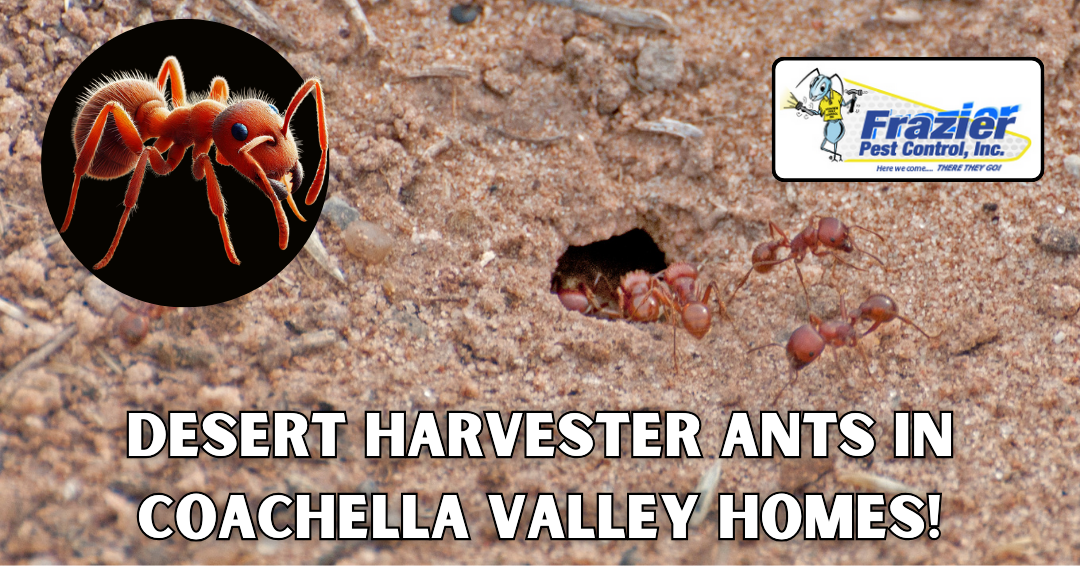
Welcome back to the Frazier Pest Control blog! As your trusted pest control experts serving the Coachella Valley, Inland Empire, and Morongo Basin, we’re here to help you tackle the local pests that threaten your comfort and safety. Today, we’re shining a spotlight on a common desert nuisance: desert harvester ants.
These industrious ants may look harmless at first, but their large mounds and painful stings can quickly become a big problem. Let’s explore how to identify them, why you should take them seriously, and how Frazier Pest Control can help.
What Are Desert Harvester Ants?
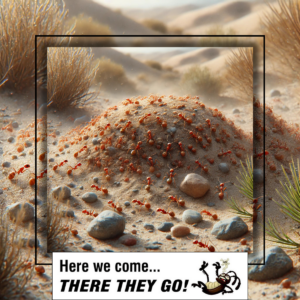 Desert harvester ants are a distinctive ant species commonly found in the arid landscapes of the Coachella Valley. Here’s how to spot them:
- Appearance: Harvester ant workers are usually ¼ to ½ inch long. Depending on the species, they may be orange, red, brown, or black.
- Mounds: Look for a broad, bare area that the ants have cleared around their nest entrance. Depending on the species, there may also be a small mound of gravel near the center.
If you’ve noticed these distinct mounds popping up around your property, there’s a good chance you’re dealing with harvester ants. Not every reddish ant is a harvester ant. UC IPM explains how California harvester ants differ from red imported fire ants. If the ants you see may be fire ants, read our guide to recognizing red imported fire ants
The Dangers of Harvester Ants
Harvester ants aren’t just a landscaping eyesore—they pose real risks to people and pets:
- Painful Stings: Harvester ants are primarily outdoor stinging ants. Their stings can cause pain, swelling, and itching; some people may experience allergic reactions.
- Aggressive Defenders: Harvester ants are highly territorial and will swarm to defend their nest if disturbed. This can lead to multiple stings, which are particularly concerning for young children and pets.
- Damage to Plants: As their name suggests, harvester ants collect seeds, which can disrupt landscaping and garden plants by stripping away valuable resources.
Prevention Tips for Harvester Ants
While harvester ants are a natural part of the desert ecosystem, there are steps you can take to reduce their presence on your property. Harvester ants mainly collect seeds outdoors and are unlikely to enter a house. If you are finding repeated ant trails inside, the ants may be another species; see our guide to stopping ant trails in Palm Springs homes for indoor entry and moisture checks
- Remove Food Sources: Eliminate exposed seeds, pet food, and sugary spills that may attract ants.
- Seal Entry Points: Inspect your home for cracks or gaps around windows, doors, and foundations. Use caulk to seal any openings.
- Maintain Your Yard: Keep your lawn trimmed and remove debris, such as rocks and wood piles, where ants may build their nests.
- Keep an Eye on Mounds: Regularly inspect your yard for new mounds. Early detection is key to preventing an infestation.
A nest in a quiet corner of the yard may not require treatment. Pay closer attention to nests near walkways, patios, or play areas where people or pets could disturb them. The University of Arizona Cooperative Extension advises assessing the risk before deciding whether to act
If a nest is close to an area your family or pets use, a professional can confirm the ant species and advise on the next step.
Why Professional Pest Control Matters
 Dealing with an ant nest near a frequently used outdoor area starts with identifying the species. Frazier’s bug removal service includes ants, and our team can assess the location before recommending a treatment plan:
- Expert Identification: Our team will confirm whether you’re dealing with harvester ants or another type of pest.
- Safe and Effective Treatments: We use eco-friendly solutions tailored to eliminate ants without harming your family, pets, or the environment.
- Long-Term Prevention: Our technicians provide tips and treatments to keep your property ant-free for the long haul.
DIY methods often provide only temporary relief, while our professional services address the root of the problem, ensuring long-term results.
Frequently Asked Questions
Q: Are harvester ants dangerous to pets? A: Yes, they can sting pets, causing pain and swelling. Pets may also disturb ant mounds, leading to multiple stings. If your pet has been stung, monitor them closely and contact your veterinarian if symptoms worsen.
Q: Can harvester ants damage my home? A: While they don’t typically damage structures, their mounds can disrupt landscaping and gardens. Additionally, their aggressive nature can make outdoor areas unsafe for children and pets.
Q: How quickly can Frazier Pest Control respond to an infestation? A: We pride ourselves on prompt, reliable service. Contact us, and we’ll schedule an inspection as soon as possible to address your concerns.
Call Frazier Pest Control Today!
Don’t let harvester ants take over your yard or ruin your outdoor activities. Contact Frazier Pest Control today for a free consultation and personalized treatment plan. Our family-owned business is dedicated to keeping your Coachella Valley home safe and pest-free.
Call us at (760) 328-6115 or visit our website to schedule an appointment. Let’s reclaim your yard from these pesky ants together!
Enhance Your Pest Control Knowledge
Be sure to check out our blog for more tips and insights on local pests. And remember, Frazier Pest Control is always here to help with your pest control needs!
Recent Comments