
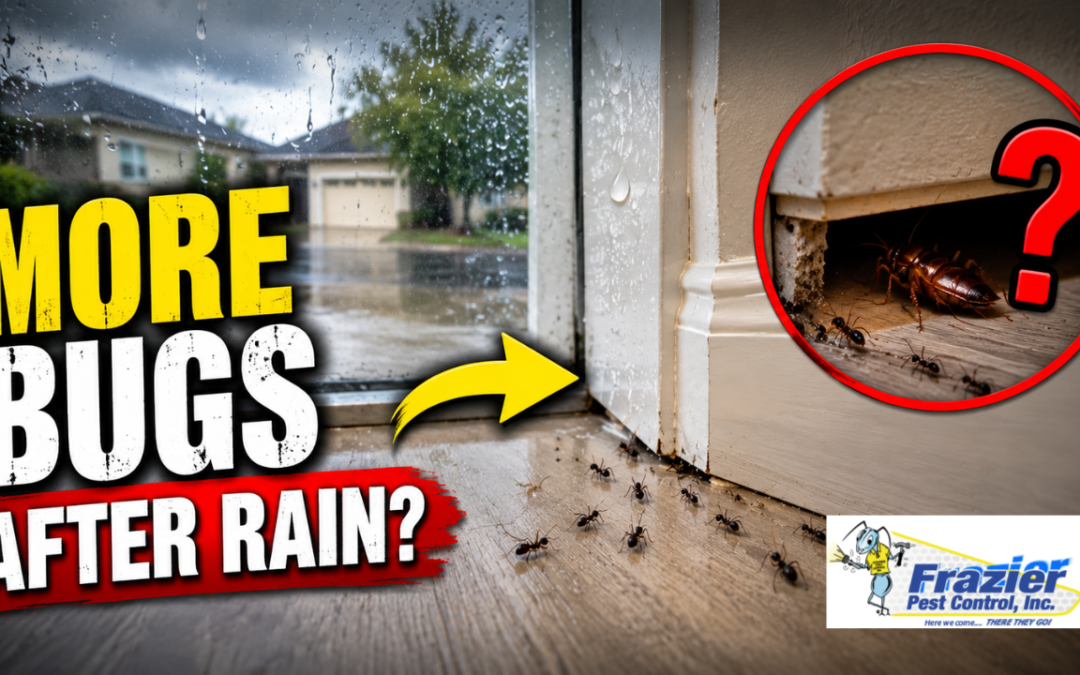
Many homeowners notice the same thing after rain: suddenly there are more bugs inside the house.
Ants appear near the kitchen. Cockroaches show up around the garage. Small insects gather near doors, windows, or baseboards.
It can feel like the rain somehow “created” pests overnight.
But what’s really happening is that rain changes the environment around your home — and pests respond quickly.
Understanding why bug activity increases after rain can help homeowners identify hidden entry points and prevent larger infestations.
When ants, roaches, spiders, or other insects appear after rainfall, the issue is often tied to moisture, shelter, and hidden entry points. If the problem keeps coming back after storms, Frazier Pest Control’s bug removal services can help identify which pests are active and where they are entering the home.
Rain Floods Pest Nesting Areas
 Many pests live underground, inside soil, mulch, or hidden outdoor spaces.
Heavy rain can:
- Flood nests
- Saturate soil
- Destroy hiding spots
- Force insects to relocate
When this happens, pests begin searching for:
- Dry shelter
- Stable temperatures
- Food and water sources
Your home becomes an ideal destination.
According to the Environmental Protection Agency, moisture and environmental disruption are major triggers for indoor pest movement.
In Coachella Valley homes, this sudden movement can turn a small outdoor pest issue into an indoor problem. Homeowners who notice repeated pest activity after rain may need professional pest control services to inspect the source, treat active areas, and reduce future entry.
Ants Often Move Indoors After Rain
Ants are one of the most common pests homeowners notice after storms.
Rain can damage outdoor colonies and disrupt pheromone trails, causing ants to:
- Search for dry nesting areas
- Follow new paths indoors
- Gather near kitchens and bathrooms
This is why ant activity often spikes immediately after rainfall.
Ant trails after rain usually mean the colony is searching for dry shelter or a new food source. If ants keep appearing near kitchens, bathrooms, windows, or exterior walls, Frazier’s All About Ants page explains common ant problems and why colonies can be difficult to control without finding the source.
Cockroaches Seek Dry Shelter
 Cockroaches thrive in damp environments, but excessive outdoor moisture can push them inside.
After rain, roaches may:
- Enter through cracks or gaps
- Move through plumbing areas
- Hide inside garages or wall voids
In desert climates like Coachella Valley, sudden moisture changes can trigger major movement.
The University of California Integrated Pest Management program explains that cockroaches often relocate indoors when outdoor conditions become unstable.
Cockroaches often hide in dark, damp, and protected spaces before homeowners see them in open areas. If roaches appear after rain or keep returning in the same parts of the house, Frazier’s bug removal services can help address the visible activity and the hidden areas where insects may be sheltering.
Rain Exposes Hidden Entry Points
Many homeowners don’t realize how easily pests enter after rain.
Common entry points include:
- Door gaps
- Cracks in stucco
- Garage seals
- Utility openings
- Window frames
Moisture can soften materials and make these gaps easier for pests to use.
If pests keep entering through one part of the home, the problem may be connected to a specific moisture source, gap, or wall opening. For a deeper explanation, read Why You Only See Pests in One Room of Your House.
Standing Water Attracts More Insects
After rainfall, standing water creates ideal breeding conditions for many insects.
This can increase:
- Mosquito activity
- Flying insects
- Spider activity nearby
Even small puddles or damp landscaping can contribute to pest problems around the home.
The CDC notes that standing water is a major attractant for insect activity.
Moisture problems can also attract insects that become food sources for spiders and other pests. If bug activity increases around wet areas, landscaping, patios, or exterior walls, Frazier’s pest control services can help identify what is attracting pests and how to reduce future activity.
Why You Notice More Bugs Indoors
Most homeowners only notice pests once they become visible.
After rain:
- Outdoor pest pressure increases
- More insects search for shelter
- Existing entry points become active
This often reveals pest problems that were already beginning behind the scenes.
A repeated pattern matters. If bugs keep showing up near the same window, sink, baseboard, bathroom, or corner, the issue may be more than random activity. Read Why You Keep Finding Bugs in the Same Spot Every Day to understand what that pattern may mean.
Why This Shouldn’t Be Ignored
Seeing more bugs after rain doesn’t always mean a major infestation — but it does mean conditions are attracting pests.
Ignoring repeated activity can allow:
- Colonies to establish indoors
- Hidden nests to grow
- Entry points to remain open
Early inspection makes a major difference.
Visible bugs may only be the surface sign of a deeper issue. In some homes, pests use wall voids, cabinets, plumbing gaps, and utility openings as hidden movement paths. Read What Pests Are Really Doing Inside Your Walls to understand why early inspection matters.
If you’re suddenly seeing more bugs after it rains, your home may already have hidden entry points or conditions attracting pests.
What starts as “a few bugs after a storm” can quickly become a larger issue if left untreated.
Frazier Pest Control specializes in identifying moisture-related pest activity, locating hidden access points, and preventing infestations before they spread.
👉 Schedule your inspection today
https://frazierpestcontrol.com/
📞 Call (760) 328-6115
Protect your home before the next storm pushes even more pests indoors.
❓ FAQ Section
1. Why do bugs come inside after it rains?
Rain floods outdoor nesting areas and forces pests to search for dry shelter indoors.
2. What bugs are most common after rain?
Ants, cockroaches, mosquitoes, spiders, and some beetles are commonly seen after storms.
3. Does rain cause infestations?
Rain doesn’t create infestations, but it can expose existing pest problems and increase movement indoors.
4. Why are ants suddenly everywhere after rain?
Rain disrupts ant trails and colonies, causing ants to relocate and search for dry nesting areas.
5. Can rain reveal hidden entry points?
Yes. Increased pest activity after storms often highlights cracks, gaps, and openings pests are using.
6. Why do I only notice bugs after storms?
Pests become more active and visible when outdoor conditions force them to relocate.
7. When should I call pest control after rain?
If you notice repeated indoor activity after storms, it’s best to inspect early before pests establish nests inside.
Recent Comments