
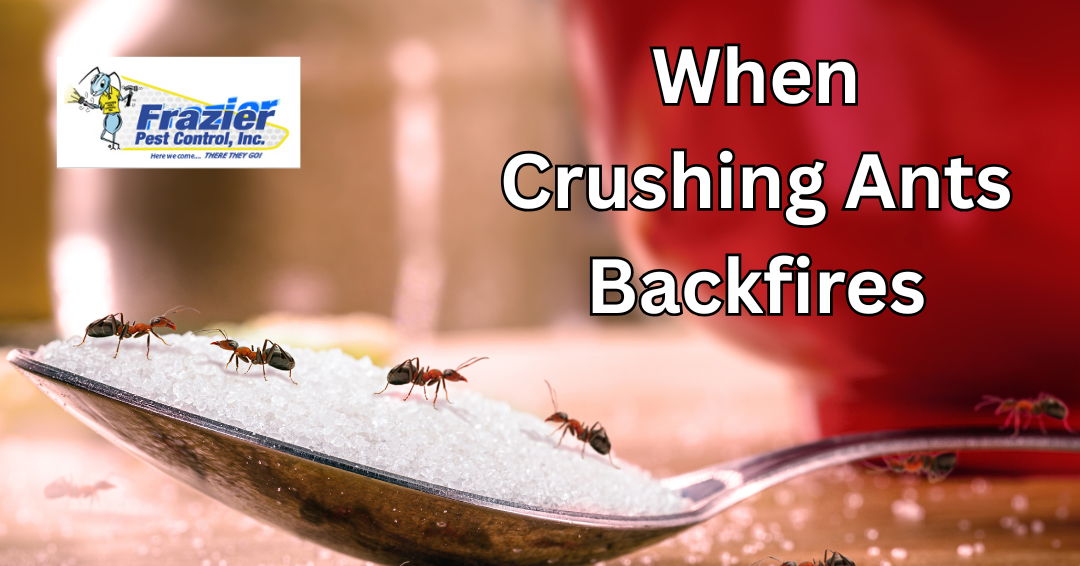
Squishing the ants you see may remove a few workers, but it does not solve the infestation behind them. Depending on the species and situation, a crushed ant may release chemical signals that affect nearby ants. However, the larger problem is that visible ants are usually only foragers. The queen, developing ants and most of the workers may remain in a nest outdoors, beneath concrete, near irrigation, under landscaping or inside a structural void. In Coachella Valley homes, the better response is to clean the trail, remove accessible food and moisture, identify the entry point and use a species-appropriate control method. If ants continue returning, professional identification may be needed.
Should You Squish Ants in Your House?
Squishing an occasional ant is not likely to create a new infestation by itself. The problem is that it removes only the worker you can see while leaving the nest and the conditions attracting the ants unchanged. Many ants use chemical signals to communicate. Depending on the species, crushing a worker may briefly cause nearby ants to investigate, scatter or change their movement. That response should not be confused with the colony suddenly growing. If ants keep appearing on the same counter, baseboard or windowsill, focus on where they are entering and what is attracting them. Repeated trails commonly point to a nearby food source, moisture source, entry point or established foraging route. Species also matters. Argentine ants in the Coachella Valley can form extensive networks containing multiple nests and queens, making surface-level control unreliable.
Signs the Ants You See May Be Part of a Larger Problem
Seeing one or two ants does not automatically confirm an infestation. However, repeated or organized activity suggests that ants have found a reliable route to food, water, shelter or a nesting location.
Look for these signs:
- Ant trails return shortly after cleaning.
- Ants repeatedly appear in the same room or location.
- Activity is concentrated near sinks, pet bowls, pantries or bathrooms.
- Ants enter through baseboards, windows, plumbing gaps or sliding doors.
- Trails extend toward landscaping, irrigation boxes or foundation cracks.
- Winged ants appear indoors.
- Larger ants or fibrous frass appear near damp or damaged wood.
These signs do not prove that the main nest is inside the house. The nest may be outdoors, beneath a slab, inside landscaping or in another protected location. Professional identification may be needed when activity continues or the species cannot be confirmed.
What Happens When an Ant Is Crushed?

Ants communicate using chemical signals that can help them follow trails, locate food, recognize colony members and respond to danger. When an ant is crushed or disturbed, chemical substances may cause a temporary response from nearby ants. The exact response varies by species and context.
Nearby ants might:
- Investigate the affected area
- Change direction or avoid the location
- Display defensive behavior
- Continue following an established food trail
This temporary activity does not necessarily mean the colony has become larger. The practical problem is that crushing workers does not reach the queen, developing ants or hidden nesting locations.
According to UC IPM’s ant-management guidance, homeowners should clean invading ants and their scent trails with soapy water, remove food and moisture sources, seal entry points and use appropriately selected bait when needed.
What Most Homeowners Get Wrong About Ant Infestations
The most common mistake is treating visible ants as the entire problem. A kitchen or bathroom trail is normally a group of foragers traveling between a resource and a nest. Killing the foragers may interrupt activity temporarily, but it does not remove the source.
Common mistakes include:
- Spraying the visible trail without identifying the species
- Ignoring crumbs, grease, pet food or sugary residue
- Overlooking plumbing leaks, irrigation or condensation
- Sealing one gap without checking where the trail continues
- Applying repellent spray around bait stations
- Assuming that a clean-looking home cannot attract ants
If ants return after cleaning or treatment, reassess the species, attractants, entry points and exterior conditions instead of repeatedly treating the same visible trail.
Species Matters Before You Choose an Ant-Control Method
Different ants have different nesting sites, food preferences and control requirements. A bait that attracts one species may be ignored by another.
| Ant type | What you may notice | Important distinction |
|---|---|---|
| Argentine ants | Long trails around kitchens, bathrooms, irrigation and landscaping | Colonies may contain multiple nests and queens |
| Odorous house ants | Small dark ants and a noticeable odor when crushed | Frequently confused with Argentine ants |
| Carpenter ants | Larger workers, activity near damp wood and fibrous frass | They excavate wood for nests but do not eat it |
| Harvester ants | Outdoor activity around cleared soil and visible nest entrances | Usually an exterior issue; some species can sting |
Carpenter ants are often associated with damp or moisture-damaged wood. Because they can be confused with other ants and termites, identification should be confirmed before recommending treatment. See UC IPM’s carpenter-ant identification guidance.
What You Should Do Instead
If you find an active ant trail, focus on the colony’s access to food, water and the building—not only the workers on the surface.
1. Clean the ants and trail
Use a sponge or cloth with soapy water to remove visible ants, food residue and the trail they have been following. Vinegar is not necessary.
2. Remove accessible food
Clean crumbs, grease and sugary residue. Store pantry products in sealed containers, rinse recycling and remove pet food after feeding when appropriate.
3. Check for moisture
Inspect under sinks, around dishwashers, near refrigerators and AC condensate lines. Outside, check irrigation emitters and areas where water collects near the foundation.
4. Follow the trail
Look for movement around plumbing penetrations, door thresholds, windows, baseboards, stucco cracks and slab edges.
5. Use bait carefully
Use only a product labeled for the ant and treatment location. Place bait where indicated by the product label, protect it from children and pets and do not spray repellent insecticide around it.
Slow-acting bait works by allowing foraging ants to carry the active ingredient back toward the colony. UC IPM notes that homeowners may notice fewer ants within 5–10 days, while more complete control can take several weeks. Learn how ant bait works.
6. Seal entry points
Once you understand where ants are entering, seal appropriate cracks and gaps around doors, windows and utility penetrations.
For a more detailed local process, read how to stop ant trails from coming back after spraying.
When Professional Ant Control Makes Sense
Professional help may be appropriate when ant trails continue after sanitation, moisture correction and properly used bait, or when activity appears in several rooms or exterior areas.
A professional assessment can help:
- Identify the ant species
- Trace interior and exterior foraging patterns
- Inspect irrigation, landscaping and foundation conditions
- Locate likely nesting or satellite-colony areas
- Select treatment methods appropriate for the species and property
- Prioritize exclusion and moisture corrections
Frazier Pest Control serves Palm Springs and communities across the Coachella Valley. Treatment recommendations should be based on the ant species, nesting conditions and layout of the property – not only the workers visible indoors.
Are Ants Dangerous?
Most ants found inside homes are primarily nuisance pests, but risks vary by species and location. Ants traveling across food-contact surfaces can create sanitation concerns. Some species can bite or sting, while carpenter ants may excavate damp or moisture-damaged wood.
Clean food-contact areas when ant activity is present, discard contaminated food and avoid handling unknown stinging ants or disturbing outdoor nests. Identification matters because the appropriate response to an Argentine ant trail is different from the response to a fire-ant or carpenter-ant problem.
Why Ants Keep Returning in Coachella Valley Homes
Ant pressure around Coachella Valley properties is often connected to the combination of dry outdoor conditions and regularly irrigated residential landscaping. During hot or dry periods, kitchens, bathrooms, pet areas and shaded patios may offer more dependable access to water and food.
Common attractants include:
- Overwatered landscaping
- Leaking irrigation emitters
- Moisture near foundations or slab edges
- Plumbing or AC-condensate leaks
- Food residue in kitchens and pantries
- Pet food or water left accessible
- Mulch, debris or vegetation against the building
- Cracks around doors, windows and utilities
Ant activity can shift as temperature, moisture and available food change. Rather than assuming that ants always move into insulation during winter, inspect the specific areas where trails and moisture are present.
Outside the home:
- Correct leaking or overspraying irrigation.
- Trim vegetation away from walls and rooflines.
- Keep mulch and organic debris away from the foundation where practical.
- Remove fallen fruit and manage insects that produce sugary honeydew.
- Seal trash and recycling containers.
These changes will not eliminate every outdoor ant, but they can reduce the conditions encouraging ants to forage near and enter the structure.
Why Ant Problems Are So Persistent in Coachella Valley Homes
Ant problems in Coachella Valley are often connected to desert conditions. When outdoor heat rises and natural water sources become limited, ants may move toward homes, irrigation systems, shaded patios, bathrooms, kitchens, pet bowls, and landscaped areas.
Common local attractants include:
- Overwatered landscaping
- Dripping irrigation lines
- Moisture around foundations
- Food residue in kitchens and pantries
- Pet food left out overnight
- Cracks around doors, windows, and slab edges
- Mulch, debris, or vegetation touching the home
This is why ant control should not focus only on the ants inside the house. The outside conditions around the property often explain why ants keep coming back.
Seasonal Ant Activity in the Coachella Valley
Ant behavior shifts with the seasons, which is why infestations may seem worse at certain times of the year. During the hot summer months, ants often head indoors in search of water, making kitchens and bathrooms prime targets. In the cooler winter season, ants are more likely to nest inside walls or insulation to stay warm. Knowing these seasonal patterns helps homeowners stay prepared—and highlights the importance of year-round pest control.
Ant Prevention Through Landscaping
Prevention starts outside. By making a few changes to your landscaping habits, you can reduce the chances of ants moving in:
- Avoid overwatering, which creates damp soil ideal for nesting
- Trim vegetation so it doesn’t touch walls or roofs, eliminating ant highways into your home
- Keep mulch and organic debris away from foundations, reducing potential shelter
These simple adjustments can go a long way in making your property less appealing to ants while protecting your home from future infestations.
Final Thoughts: Think Before You Squish
It might feel satisfying to squish an ant or two, but it’s a short-term move with long-term consequences. You could be making the infestation worse.
Instead, trust an expert who understands desert pests, their behaviors, and how to keep them out—safely and permanently.
Read more: Argentine Ants in the Coachella Valley: The Unstoppable Invasion
FAQ: Ant Control in Coachella Valley
Q: What kind of ants are common in the Coachella Valley?
A: Argentine ants and carpenter ants are among the most common, though fire ants and pavement ants also appear in some areas.
Q: Will store-bought sprays work for ant control?
A: Sprays may kill ants on contact but don’t reach the colony. They can also cause colonies to split or relocate.
Q: How long does it take to get rid of an ant infestation?
A: With professional treatment, visible results often appear within a few days, but full colony elimination can take 1–2 weeks, depending on severity.
Q: How can I prevent ants from coming back?
A: Keep food sealed, clean up spills immediately, maintain landscaping, and schedule regular pest control visits.
Call the Experts
If you’re seeing ant activity—don’t wait for it to escalate. Let Frazier Pest Control take the guesswork out of pest management with safe, effective, and locally tailored solutions.
📞 Call us today at 760-989-7378 or visit our website to schedule your free inspection.
Ant Trails Keep Returning?
Squishing or spraying the ants you can see may provide temporary
relief, but it does not address the hidden colony. If ants keep
returning after cleaning, baiting and sealing entry points,
Frazier Pest Control can inspect the activity and recommend the
appropriate treatment.
Ant-control service for Palm Springs and communities throughout
the Coachella Valley.
Recent Comments