
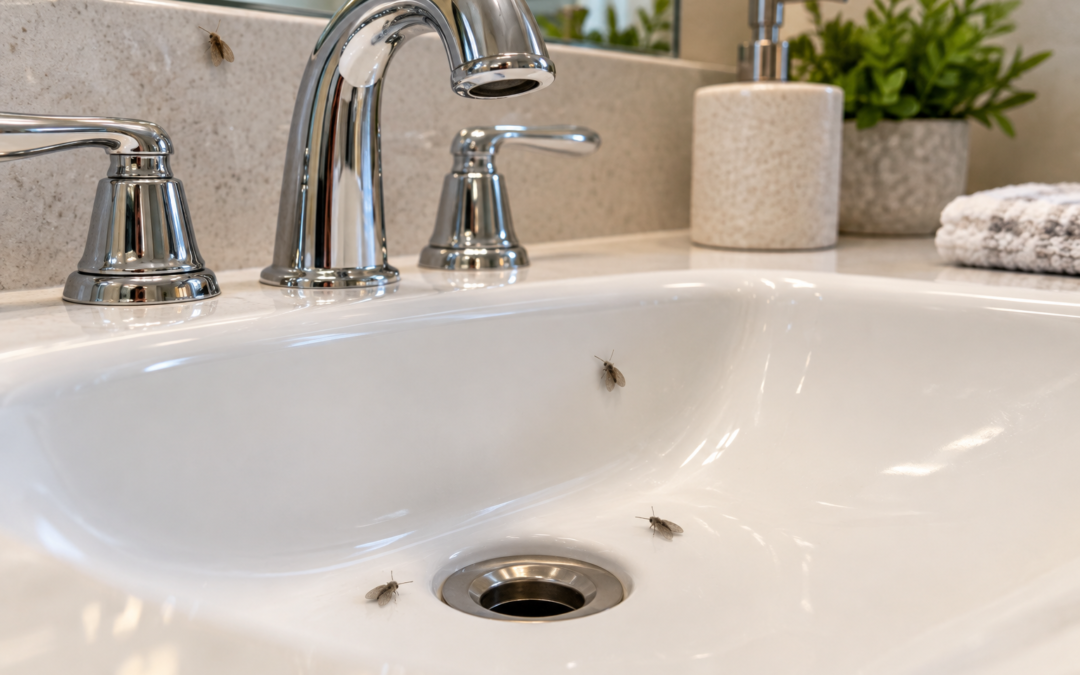
If you’ve walked into your bathroom and noticed tiny flies hovering around the sink—especially in the morning or right after you run water—you’re not alone in the Coachella Valley. In Palm Springs, Palm Desert, Rancho Mirage, and nearby desert cities, we see this pattern a lot: a homeowner sprays a little aerosol, the flies disappear for a day, and then they’re back… usually in the same spot.
That’s because the problem usually isn’t “flies in the room.” It’s a breeding site inside the drain system.
Below is a straightforward, problem/solution guide to stopping drain flies at the bathroom sink—what to check, what actually works, and when it’s time to bring in Frazier Pest Control.
The specific problem: drain flies at the bathroom sink (and why spraying doesn’t work)
Drain flies (also called moth flies) are small, fuzzy-looking flies that tend to rest on walls near sinks, tubs, or showers. They’re weak fliers, so you’ll often see them sitting still near the drain or fluttering in short hops.
The reason spraying doesn’t solve it: adult drain flies are only the visible tip of the issue. The real source is typically a thin, slimy organic film inside the drain—made up of soap residue, skin cells, toothpaste spit, hair, and other buildup. That film is where drain fly larvae feed and develop.
So you can kill the adults you see today, but if the drain film remains, new adults will keep emerging.
Confirm it’s drain flies (not fruit flies or fungus gnats)
Before you treat, it helps to confirm what you’re dealing with. Different small flies have different sources.
What drain flies usually look like:
– Tiny (often 1/8 inch), gray to tan
– Fuzzy or moth-like wings
– Often found near bathroom sinks, showers, tubs, or floor drains
Common look-alikes:
– Fruit flies: more “tan/orange,” often around kitchens, trash, recycling, or overripe fruit.
– Fungus gnats: slender, dark, and often tied to overwatered houseplants.
Two quick checks you can do at home:
A) The tape test (overnight)
– Place a piece of clear tape over the sink drain opening at night (sticky side down), leaving a small gap so water can still pass if needed.
– In the morning, check the tape.
If you catch small flies on the tape, it strongly suggests they’re coming from the drain.
B) The “where do they rest?” check
– Drain flies often rest on the wall or backsplash within a foot or two of the drain.
– If you consistently see them near the sink drain (not near a window or light), that’s another clue.
If you confirm drain flies, move on to the part that matters: removing the breeding material.
Fix the source: remove the slime layer in the drain (and the overflow)
The goal is not just to “freshen” the drain. The goal is to physically remove the organic film where larvae develop.
Step 1: Start with a thorough mechanical clean
– Remove visible hair and gunk from the stopper area.
– Use a stiff drain brush (a long, narrow brush designed for drains) to scrub the inside walls of the drain line as far as you can reach.
– Pay attention to the upper section of the pipe where buildup is thickest.
Why this matters: drain fly larvae feed on the film. Scrubbing breaks up and removes it.
Step 2: Don’t forget the overflow channel
Many bathroom sinks have an overflow opening near the top of the basin. That channel can hold biofilm too.
– Use a small brush or flexible cleaning tool to scrub inside the overflow opening.
– Flush it with hot water afterward.
In a lot of “we cleaned the drain, but they’re still here” cases, the overflow is the hidden source.
Step 3: Flush with hot water (and repeat)
After scrubbing:
– Flush the drain with hot water.
– Repeat the scrub/flush routine daily for several days.
Drain flies develop quickly. If you remove the film and keep disrupting it for a few days, you usually break the cycle.
A note about chemical drain cleaners:
Some products can help, but they’re not a substitute for scrubbing. If the film stays stuck to the pipe walls, the problem can continue. Also, harsh chemicals can be risky for certain plumbing setups and can create fumes in enclosed bathrooms. If you’re unsure, stick to mechanical cleaning and hot water, or contact a professional.
Prevent the comeback: moisture, leaks, and low-use bathroom routines
In desert homes—especially seasonal or part-time residences in Palm Springs, Indian Wells, La Quinta, and Rancho Mirage—drain fly issues can pop up when bathrooms aren’t used regularly or when a small plumbing issue keeps an area damp.
Here are the most common “why it came back” causes we see.
A) A slow leak under the sink
Even a minor drip at the P-trap or supply line can keep the cabinet area humid and allow organic buildup to stay wet.
– Check for dampness under the sink.
– Look for mineral staining or warped cabinet base.
– Fix leaks promptly.
B) A rarely used sink or guest bathroom
Low-use drains can develop buildup that sits undisturbed.
– Run water in the sink for 30–60 seconds a few times per week.
– If the home is vacant for stretches, add a simple routine: run water in all sinks, showers, and tubs when you visit.
C) Nearby drains you didn’t treat
Drain flies don’t always originate from the exact drain you notice first.
– Check the shower/tub drain in the same bathroom.
– If there’s a floor drain (common in some laundry rooms or utility areas), check that too.
If you only clean the sink but the shower drain is breeding flies, you’ll keep seeing adults.
D) Plumbing issues that mimic a “drain fly problem”
If you’ve scrubbed thoroughly and the flies persist, there may be a deeper issue such as:
– Heavy buildup further down the line
– A partial clog holding organic material
– A drain line problem creating standing water
In those cases, the right fix may involve targeted inspection and a plan that addresses the actual breeding site.
When to call Frazier Pest Control (and what to expect)
If you’ve done the mechanical cleaning steps and you’re still seeing drain flies after about a week—or you’re seeing them in multiple bathrooms—it’s time to bring in help.
Consider calling Frazier Pest Control if:
– Drain flies are showing up in more than one sink/shower
– The problem returns quickly after cleaning
– You suspect a hidden moisture issue (leak, standing water, or plumbing odor)
– You’re in a seasonal home and want a preventative plan before you leave town
What a professional approach focuses on:
– Confirming the pest (drain flies vs. another small fly)
– Identifying the true breeding source (sink drain, overflow, shower drain, floor drain, or another moisture area)
– Recommending the most effective corrective steps so you’re not stuck in a spray-and-repeat cycle
The key is accuracy. When the breeding site is correctly identified and addressed, drain fly problems typically resolve without needing endless treatments.
A quick local note for Coachella Valley homes
In Palm Springs and surrounding desert cities, we often see drain fly complaints tied to guest bathrooms, vacation properties, and bathrooms that don’t get daily use. Add in warm temperatures and occasional plumbing drips, and you can get a fast-moving cycle. The good news: when you remove the drain film and correct moisture conditions, the problem usually stops.
If you want help pinpointing the source and getting rid of drain flies for good, Frazier Pest Control serves Palm Springs, Palm Desert, Rancho Mirage, Desert Hot Springs, Indian Wells, Cathedral City, La Quinta, Indio, and Coachella.
Recent Comments