
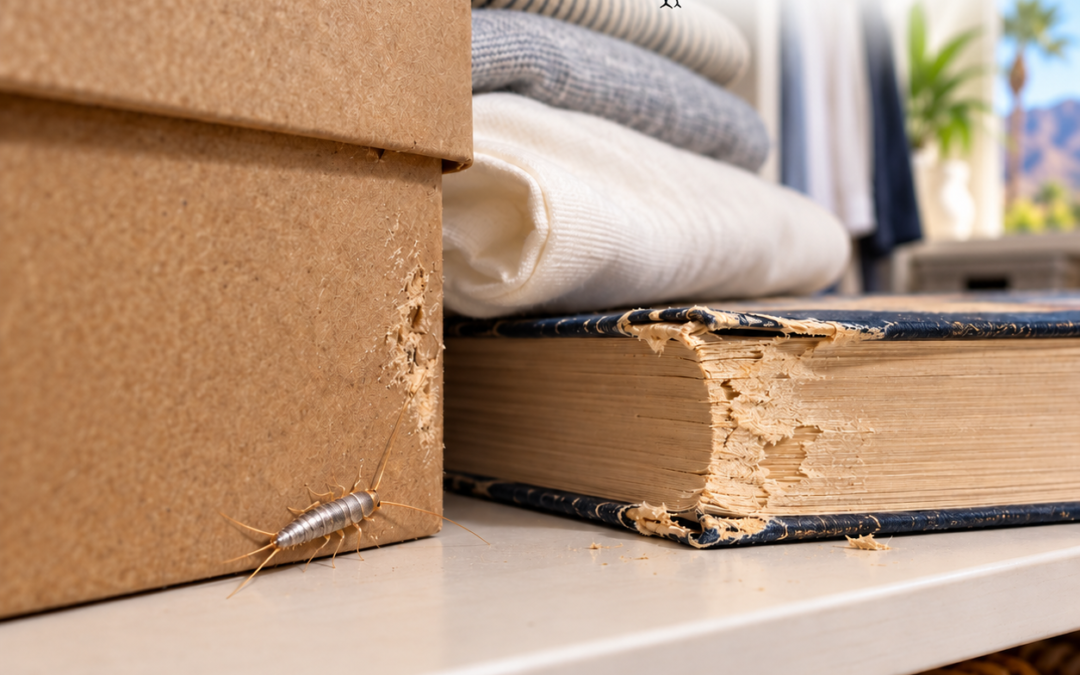
If you live in the Coachella Valley, it’s easy to assume a dry desert climate means fewer moisture-loving pests. Then you open a storage bin in the closet and find tiny, silvery insects darting into the dark. Or you notice pinholes and rough “scraped” patches on cotton shirts, a damaged book spine, or yellowed paper that looks like it’s been sanded. That’s often a silverfish problem—and it can show up in Palm Springs, Palm Desert, Rancho Mirage, and surrounding cities more often than people expect.
This is a seasonal issue in many desert homes because indoor conditions can create the exact microclimates silverfish need: cool tile bathrooms, shaded laundry rooms, leaky supply lines, HVAC condensation, and tightly packed closets containing cardboard and paper. These hidden moisture problems inside Coachella Valley homes can support pest activity even when the rest of the property feels dry. The good news is that silverfish control is very doable when you focus on the right targets: moisture pockets, food sources, and harborage.
Below is a practical, Coachella Valley–specific plan to stop silverfish from damaging paper and clothing—without relying on random sprays that don’t address the source.
Why silverfish spike in desert homes (and why “dry climate” doesn’t stop them)
Silverfish don’t need your whole house to be humid. They need small, consistent pockets of moisture and shelter. In the desert, those pockets often come from:
• Bathrooms with daily showers and limited ventilation (especially guest baths that stay closed).
• Laundry rooms where washers, drain lines, or water heater pans create intermittent dampness.
• HVAC systems: condensate lines, drip pans, or cool supply ducts that can create condensation in certain conditions.
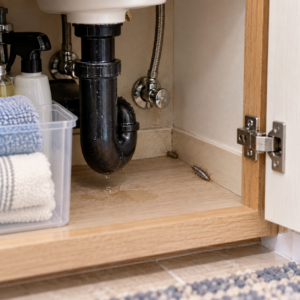
• Under-sink plumbing: slow leaks, loose shutoff valves, or sweating pipes.
• Garages and storage: cardboard boxes on concrete floors, where temperature swings and occasional moisture can create a favorable zone.
Seasonally, people also change routines: more guests, more laundry, doors closed to keep cool air in, and less airflow in closets and bathrooms. That combination can make silverfish more noticeable.
Silverfish activity does not necessarily indicate that a home is dirty. Moisture, shelter, undisturbed storage, and small access points help explain why pests can appear in clean homes.
What silverfish are actually eating and where the damage starts
Silverfish are scavengers with a preference for starchy materials and certain proteins. In real homes, the “food” that keeps them going is often:
• Paper products: books, stored documents, wallpaper backing, paper bags, and cardboard.
• Clothing and textiles: especially items with starch, sizing, or food residue (think: stored linens, cotton, rayon, and sometimes silk). They’re also attracted to lint and skin flakes.
• Pantry and storage items: flour dust, cereal crumbs, pet food dust, and even glue on packaging.
• Adhesives: book bindings, labels, and some tapes.
The earliest signs are easy to miss: tiny irregular holes in paper, surface scraping that looks like light sanding, pepper-like droppings, and shed skins in corners. If you’re seeing silverfish in the open (bathtub, sink, baseboards), there’s usually a hidden population nearby.
Repeated sightings near the same sink, baseboard, cabinet, or closet usually indicate that something in that immediate area is supporting the activity. Learn why bugs keep appearing in the same spot and what that pattern may reveal about moisture, shelter, or a nearby hiding place.
A room-by-room inspection checklist (bathrooms, laundry, kitchen, closets, garage)
To stop the damage, you need to find the “why here?” zone. Use this checklist and take notes—silverfish control improves fast when you identify patterns.
 Bathrooms
• Look behind the toilet, under the vanity, and around the tub/shower caulk line.
• Check the baseboards near the shower and any bath mats stored on the floor.
• Inspect the exhaust fan: does it actually pull air? If it’s weak, humidity lingers.
• Look for gaps around plumbing penetrations under the sink.
Laundry room
• Check behind the washer for slow leaks and damp drywall.
• Inspect the dryer vent area for lint buildup (lint is a food source and harborage).
• Inspect the water-heater pan, nearby shutoff valves, pipe connections, and surrounding floor for condensation or slow leaks. If activity is concentrated in this area, learn why pests gather near water heaters.
Kitchen
• Check under the sink and behind the dishwasher.
• Look for crumbs behind the stove and refrigerator.
• Inspect pantry shelving for spilled flour/sugar and paper packaging.
Closets and linen storage
• Pull items off the floor and inspect corners and baseboards.
• Look for cardboard boxes, paper bags, and stacks of books.
• Check stored clothes for “mystery” stains or food residue (even small spills attract scavengers).
Garage and storage areas
• Inspect boxes stored directly on concrete.
• Check around the garage door seal and side gaps.
• Look for stored paper goods (holiday decorations in cardboard, old files, book boxes).
If you find silverfish in multiple rooms, don’t assume you have multiple unrelated problems. It’s often one or two key moisture/harborage zones feeding the rest.
The opposite pattern also matters. If activity remains concentrated in one bathroom, laundry room, closet, or garage, review why pests appear in only one room before treating the sightings as random.
DIY steps that work in the Coachella Valley: moisture, storage, sealing, and sanitation
A) Reduce the moisture pockets (the real driver)
• Run bathroom fans for 20–30 minutes after showers. If the fan is weak, consider upgrading it—this is one of the most effective “pest control” improvements you can make.
• Fix slow leaks immediately. Even a small drip under a sink can maintain a silverfish-friendly microclimate.
• Keep closet doors cracked occasionally or improve airflow with simple spacing (don’t pack items tight to the wall).
• If you have a rarely used guest bathroom, run the fan occasionally and keep the door open to prevent stagnant humidity.
B) Remove the food and shelter that cause damage
• Replace cardboard storage with sealed plastic bins (especially for paper goods and seasonal clothing).
• Store books and important documents in sealed containers if you’ve had active silverfish.
• Vacuum baseboards, closet corners, and under appliances. Focus on lint, hair, and dust—silverfish thrive on what most people overlook.
• Wash or dry-clean clothing before long-term storage. Small residues can be enough to attract feeding.
C) Seal the easy entry/harborage gaps
Silverfish hide in tight cracks. In many Coachella Valley homes, the best targets are:
• Gaps around plumbing under sinks (use appropriate sealant/escutcheon plates).
• Baseboard gaps and cracks at tile transitions.
• Gaps around door thresholds and garage door seals.
Plumbing openings, utility penetrations, garage seals, foundation cracks, and AC-line gaps can create connected pest pathways. Use this hidden pest entry-point checklist to inspect beyond the room where the silverfish was found.
D) Use targeted products carefully (and avoid the common mistakes)
If you choose to use store-bought products, focus on crack-and-crevice applications rather than open-area spraying.
• Dust products (applied correctly into voids and cracks) can be effective, but over-application creates mess and can be counterproductive.
• Sticky monitors (glue boards) help you confirm activity and pinpoint rooms.
Common mistakes that don’t solve the problem:
• Spraying baseboards once and expecting it to last while moisture and cardboard remain.
• Foggers/bombs (they don’t reach the cracks where silverfish live).
• Treating only the room where you saw one silverfish, instead of the moisture source feeding the population.
When it’s time to call Frazier Pest Control (and what a professional plan targets)
If you’re seeing repeated activity, finding damage to books/clothes, or spotting silverfish in multiple rooms, it’s usually time for a professional approach. The goal isn’t just to “kill what you see.” It’s to break the cycle by targeting:
• Harborage zones: cracks, voids, and hidden edges where silverfish rest.
• Moisture-adjacent areas: bathrooms, laundry rooms, under-sink cabinets, and any known leak zones.
• Perimeter and entry points: reducing the chance of ongoing movement from garage/storage areas into living spaces.
A professional plan also helps you avoid the trial-and-error that happens when homeowners rotate products without a strategy. With silverfish, consistency and placement matter more than “stronger spray.”
If you’re in Palm Springs, Palm Desert, Rancho Mirage, Desert Hot Springs, Indian Wells, Cathedral City, La Quinta, Indio, or Coachella, Frazier Pest Control can help identify the source conditions and develop a targeted treatment plan for the rooms showing activity. Learn more about our silverfish and other household bug-removal services.
Prevention plan for the next 30–60 days
Use this simple timeline to keep the problem from returning.
Next 48 hours
• Vacuum closet corners, baseboards, and under-sink cabinet floors.
• Remove cardboard from closets and bathrooms.
• Set a few sticky monitors in bathrooms, laundry, and a problem closet to map activity.
Next 2 weeks
• Fix any leaks you found (even “minor” ones).
• Improve bathroom ventilation habits; keep doors open when possible.
• Move stored items off floors and into sealed bins.
Next 30–60 days
• Re-check monitors and note which rooms stay active.
• Seal gaps around plumbing and baseboards where you consistently see activity.
• If activity persists or damage continues, schedule a professional inspection and treatment so you’re not chasing the issue room by room.
Silverfish problems are frustrating because they’re quiet until you notice the damage. But once you remove the moisture pockets and the paper/cardboard shelter, you can usually get control quickly—and keep your closets, books, and stored linens protected long-term.
Request a Silverfish Inspection
Finding silverfish near stored clothing, books, bathrooms, laundry areas,
or under-sink cabinets? An inspection can help identify active areas,
moisture sources, hidden harborage, and the cracks or gaps supporting
continued activity.
Silverfish-control assistance for Palm Springs and communities throughout
the Coachella Valley.
Recent Comments