
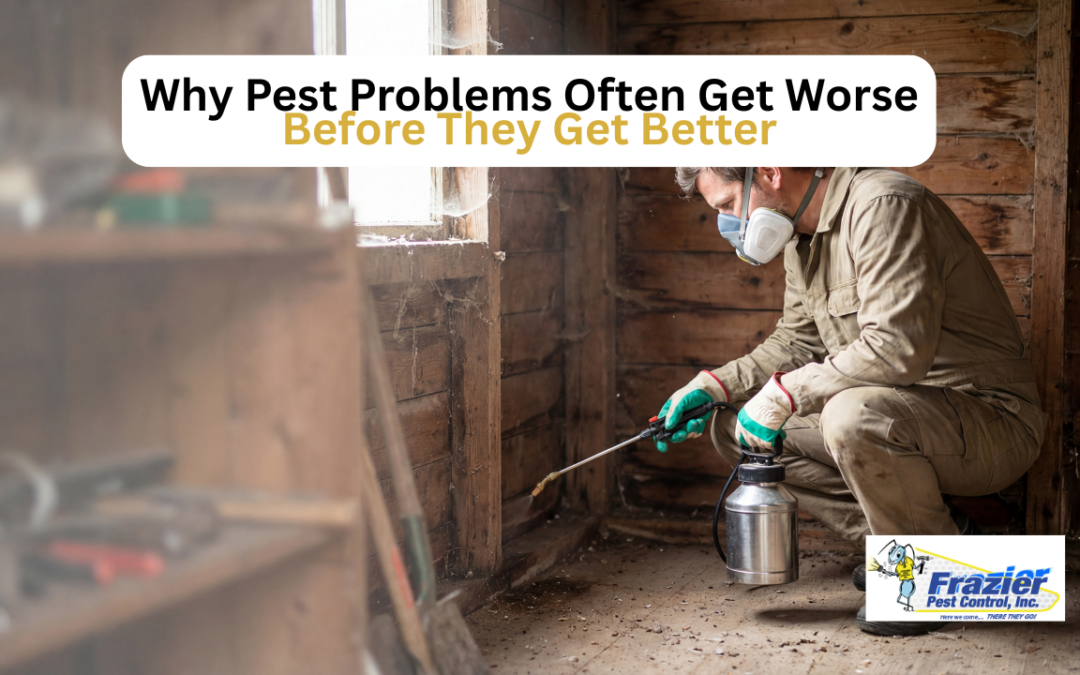
One of the most frustrating experiences for homeowners is starting pest control treatment — only to feel like the problem is getting worse.
More ants appear. Roaches seem more active. Activity that was once occasional suddenly becomes noticeable. Many homeowners assume something has gone wrong or that treatment isn’t working.
In reality, this temporary increase in activity is often a normal and expected part of effective pest control. Understanding why this happens can help homeowners avoid panic, unrealistic expectations, and unnecessary delays in solving the problem correctly.
Read more: Why Squishing Ants Can Make Your Infestation Worse
Pests Are Forced Out of Hiding
 Most household pests don’t live where you see them. They hide in wall voids, under cabinets, inside insulation, and behind appliances.
When professional treatment is applied, it disrupts these nesting and hiding areas. Pests that were previously hidden are forced to move, which makes activity more visible — especially in the first days or weeks.
According to the Environmental Protection Agency, effective pest management targets pest habitats and nesting areas, not just visible insects.
Read more: Why Cockroaches Come Out at Night (and What Daytime Means)
Increased Activity Is Often a Sign Treatment Is Working
Seeing more pests shortly after treatment does not usually mean the infestation is growing. It often means pests are being flushed out, disoriented, or driven away from established nesting zones.
Ants may attempt to reroute trails. Cockroaches may move into open areas they normally avoid. Rodents may become more active as nesting spaces are disrupted
Read more: What Are the Symptoms of a Black Widow Spider Bite? Coachella Valley
Pest Life Cycles Don’t Stop Overnight
 Another reason problems may seem worse before improving is pest biology. Many treatments do not kill eggs immediately. As eggs hatch, new pests emerge — but these pests are already exposed to treatment and will not survive long-term.
The University of California Integrated Pest Management program explains that pest populations decline gradually as life cycles are interrupted.
This process takes time and consistency, not instant results.
Read more: Gamers Beware: Roaches Could Be Hiding in Your PS5 or Xbox
Why DIY Treatments Often Make This Phase Worse
Over-the-counter sprays and foggers can scatter pests deeper into walls or force colonies to split, making infestations harder to control.
Professional treatments are designed to manage this temporary increase safely and strategically, targeting nests and entry points instead of reacting to surface activity.
Read more: Insects in Palm Springs, CA: What You Need to Know
Rodent Behavior Can Change After Treatment
Rodents may become more visible when access points are sealed or baiting strategies begin. This doesn’t mean rodents are increasing — it means their movement patterns are changing.
According to the USDA, rodent activity often increases temporarily when nesting areas are disrupted.
Read more: How Your HVAC System Could Be Attracting Cockroaches in Desert Homes
Why Patience and Follow-Through Matter
Pest control is a process, not a single event. Skipping follow-up visits or stopping treatment too early often allows surviving pests to rebuild.
Professional programs are designed to:
Eliminate active pests
Interrupt breeding cycles
Seal entry points
Prevent re-infestation
Temporary increases are part of reaching long-term control.
Read more: How Much Does Pest Control Cost for Coachella Homeowners
Frequently Asked Questions
Q: Is it normal to see more pests after treatment?
Yes. Increased activity is often temporary and expected.
Q: How long does this phase last?
It varies by pest, but activity typically declines as treatments take effect over days or weeks.
Q: Should I spray more if I see pests after treatment?
No. Additional sprays can interfere with professional treatment and make the problem worse.
If pest activity seems worse after treatment, it doesn’t mean the solution failed — it often means the process is working.
The biggest mistake homeowners make is stopping treatment too early or trying to fix it themselves.
That’s how temporary activity turns into a long-term infestation.
Frazier Pest Control designs treatment plans that account for pest behavior, life cycles, and realistic timelines — so problems are solved at the source, not just masked.
👉 Schedule a professional inspection today:
https://frazierpestcontrol.com/
📞 Call (760) 328-6115
Recent Comments