
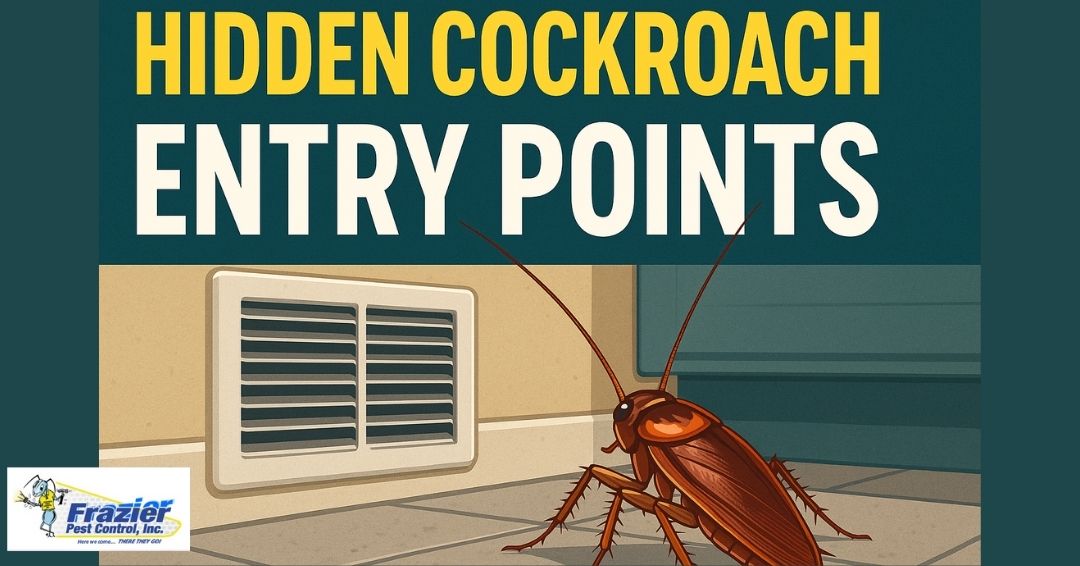
You clean regularly, store food properly, and take out the trash—but cockroaches still show up. If you live in the Coachella Valley, you’re not imagining things. The desert climate makes indoor environments especially appealing to roaches, particularly when they can easily slip in through cockroach entry points in Coachella Valley homes—small, hidden gaps that most homeowners never notice.
At Frazier Pest Control, we’ve inspected hundreds of homes from Palm Springs to Indio, and we can tell you: even the tiniest crack or gap can become a superhighway for pests.
Here are the top 7 hidden cockroach entry points we find in Coachella Valley homes—and what you can do to block them before pests invade.
1. Gaps Around Exterior Doors and Garage Seals
Cockroaches can squeeze through openings as thin as a credit card. Gaps under your front door, back slider, or garage door provide easy access—especially after dark, when cockroaches are commonly active. Learn why cockroaches come out at night and what daytime sightings may mean.
Fix it:
Install weatherstripping or door sweeps. Make sure garage door seals fully close without light leaking through. The University of California’s cockroach control guidance recommends door sweeps, weatherstripping, and sealing exterior openings to help prevent cockroaches from entering.
 2. Wall Penetrations for Plumbing or Wiring
 2. Wall Penetrations for Plumbing or Wiring
Utility lines—like outdoor faucets, cable lines, and A/C connections—often leave small, unsealed holes in walls. These become perfect pathways for roaches to travel directly into wall voids and eventually into your home.
Fix it:
Seal gaps with expanding foam or silicone caulk. Pay close attention to utility areas like laundry rooms, bathrooms, and kitchens. UC IPM’s guidance on Turkestan cockroaches recommends keeping screens intact, sealing exterior cracks, and using door sweeps to limit entry by this outdoor species.
3. Cracks in Stucco or Foundation Offer Cockroach Entry Points
Older homes and those exposed to extreme desert heat may develop small foundation cracks or stucco gaps. These cracks allow pests to move from soil or mulch directly into your crawl space or wall system.
Fix it:
Inspect the perimeter of your home annually. Use exterior-grade caulking or concrete filler to seal gaps.
4. Unsealed Attic Vents or Soffits
Roaches—and other pests—can climb and enter through attic vents, especially if the mesh is torn or missing. Once inside the attic, they can travel through insulation and find access points into your living space.
Fix it:
Use fine mesh screens (1/8 inch or smaller) on all attic vents and soffits. Check after every storm or wind event.
5. Drainage Pipes and Weep Holes
Some homes have small drainage holes near the foundation, especially around windows and brick veneer. While they serve a purpose, they also provide access if left uncovered.
Fix it:
Use breathable stainless-steel mesh to block entry without disrupting airflow or drainage.
6. Dryer Vents and Exhaust Fans
Cockroaches love warm, dark spaces—making your dryer vent or bathroom exhaust fan an attractive entryway. If the backdraft flap is damaged or missing, pests can crawl right in.
Fix it:
Ensure your dryer vent has a functional flap and is properly secured. Cover exterior exhausts with pest-resistant vent covers.
7. Damaged or Missing Window Screens
Even a tiny tear in a window or sliding door screen can offer enough space for a cockroach to squeeze through. Since many Coachella Valley homes rely on open windows for ventilation in cooler months, this is a common risk.
Fix it:
Inspect screens each season and repair holes immediately. Use pet-resistant screen material if durability is a concern.
Real Case: A Palm Desert Surprise Entry Point
 Real Case: A Palm Desert Surprise Entry Point
A family in Palm Desert had roaches showing up in their laundry room and couldn’t figure out why. Our inspection revealed a small, unsealed pipe penetration behind the washer leading to the exterior wall. We sealed the gap and treated the area—problem solved. If roaches continue appearing after you seal a suspected entry point, check for early signs of a cockroach infestation, including droppings, egg cases, and activity near appliances. Finding the entry point and checking for an established population are both important.
FAQs
Can cockroaches really enter through tiny cracks and holes?
Yes! Cockroaches can squeeze through openings as small as 1/16 of an inch. Even gaps you don’t notice—like those around pipes, windows, or attic vents—can provide an open door to your home.
Why are these cockroach entry points so common in Coachella Valley homes?
The desert climate causes building materials to expand and contract, which can create or worsen small cracks and gaps over time. Plus, older homes may have less pest-proofing by default.
How can I be sure my home is sealed properly?
The best way is with a professional inspection. At Frazier Pest Control, we know where cockroaches enter and what desert conditions cause trouble. We’ll assess your home, identify vulnerabilities, and recommend sealing and treatment options to protect your space.
Seal Them Out—Before They Move In
Cockroach infestations don’t start overnight—they start with a single point of entry. And in Coachella Valley homes, those entry points often go unnoticed until it’s too late.
If you want to keep roaches out for good, schedule an inspection with Frazier Pest Control. We’ll help you close the door—literally—on hidden pest pathways.
📞 Call us at (760) 328-6115 or visit frazierpestcontrol.com to schedule your inspection today.
Proudly serving Palm Springs, La Quinta, Indio, Cathedral City, and the entire Coachella Valley.
Recent Comments