
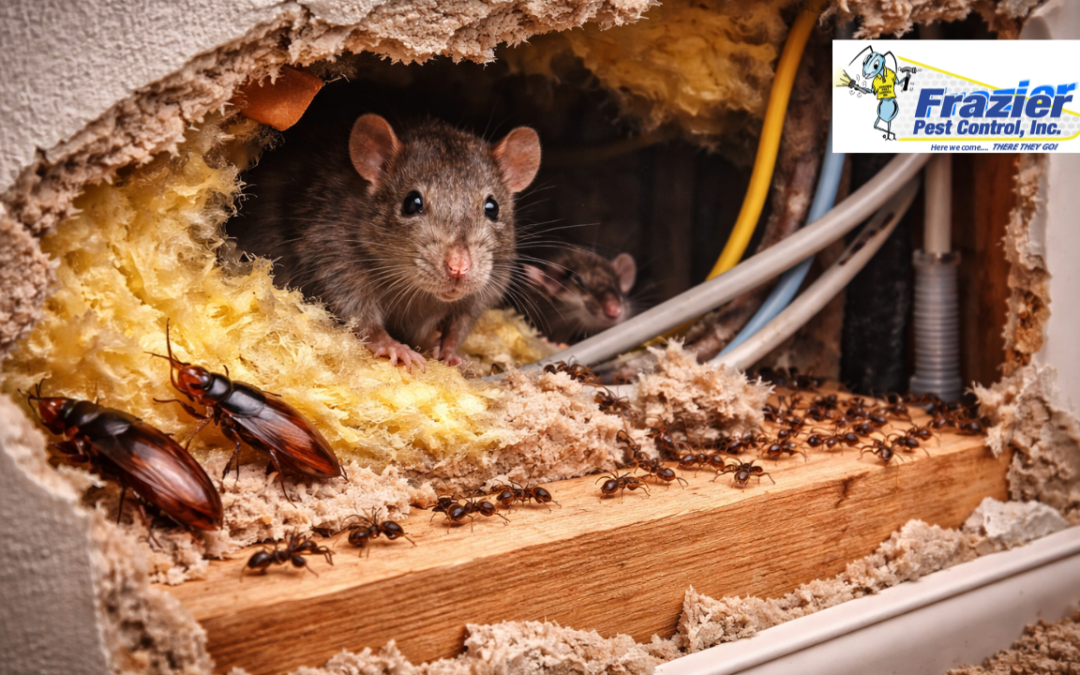
Most homeowners hear it at some point — a scratching sound, faint movement, or something shifting inside the walls.
It’s easy to ignore at first. But what’s happening inside your walls is rarely random.
Pests don’t just pass through. They live, nest, reproduce, and move strategically inside wall spaces — often long before you ever see them.
Understanding what pests are actually doing inside your walls can help you catch problems early and avoid costly damage.
🏠 Why Walls Are Ideal for Pests
Wall voids provide everything pests need:
- Protection from humans and predators
- Stable temperatures
- Access to wiring and insulation
- Pathways throughout the home
- Close proximity to food and water
According to the Environmental Protection Agency, pests prefer hidden areas like wall voids where they can remain undisturbed.
🐭 Rodents Build Nests and Multiply
Mice and rats commonly live inside walls.
Once inside, they:
- Build nests using insulation and debris
- Chew through materials to expand space
- Reproduce quickly
- Travel between rooms through wall pathways
Rodents can also chew electrical wires, which increases fire risk.
According to the CDC, rodents can spread bacteria and contaminate indoor environments.
🪳 Cockroaches Hide and Reproduce
Cockroaches often live inside wall voids near kitchens and bathrooms.
Inside your walls, they:
- Stay hidden during the day
- Travel out at night to find food
- Lay egg casings in protected areas
- Spread to multiple rooms
Because they hide so effectively, infestations often grow before being noticed.
🐜 Ants Build Colonies and Highways
 Ants don’t just enter your home — they build entire colonies inside walls.
They create:
- Nesting chambers
- Pheromone trails
- Travel routes between rooms
- Access points to kitchens and bathrooms
Once established, colonies can expand quickly.
The University of California Integrated Pest Management program notes that ants use hidden structural spaces to expand colonies indoors.
🐛 Termites and Other Pests Cause Structural Damage
Some pests don’t just live inside walls — they damage them.
Termites and certain insects:
- Feed on wood structures
- Weaken framing
- Create tunnels inside walls
- Cause long-term structural issues
Damage often goes unnoticed until it becomes serious.
🔊 Why You Hear Noises Inside Walls
Common sounds include:
- Scratching or scurrying
- Light tapping or chewing
- Movement at night
These sounds usually happen when pests are active — especially rodents and insects searching for food or building nests.
⚠️ Why This Shouldn’t Be Ignored
 Pests inside walls don’t stay contained.
Over time, they can:
- Spread to other areas of the home
- Increase in population
- Cause damage to wiring and insulation
- Contaminate surfaces and air
What starts inside the walls often becomes visible later.
If you’re hearing movement or suspect pests inside your walls, it’s important to act early.
Pests rarely leave on their own — and the longer they stay hidden, the more damage they can cause.
Frazier Pest Control specializes in identifying hidden pest activity, locating entry points, and eliminating infestations at the source.
👉 Schedule your inspection today:
https://frazierpestcontrol.com/
📞 Call (760) 328-6115
Don’t wait until the problem moves from inside your walls into your living space.
❓ FAQ Section
1. What pests live inside walls?
Common pests include rodents, cockroaches, ants, termites, and other insects that prefer hidden, protected spaces.
2. Why do I hear scratching in my walls?
Scratching sounds are often caused by rodents moving, nesting, or chewing inside wall spaces.
3. Can pests damage my home from inside the walls?
Yes. Rodents can chew wires and insulation, while termites can damage wood structures over time.
4. How do pests get inside walls?
They enter through small gaps around pipes, vents, foundations, rooflines, and exterior openings.
5. Are pests in walls dangerous?
They can be. Some pests spread bacteria, trigger allergies, or cause structural and electrical damage.
6. Will pests leave on their own?
Usually not. Most pests will stay, nest, and multiply if conditions remain favorable.
7. When should I call pest control?
If you hear noises, see signs of activity, or notice repeated pest sightings, it’s best to schedule an inspection early.
Recent Comments